
A legal challenge against FIFA has been broadened to include allegations of “abusive conduct” concerning the scheduling of the women’s game in Europe. The European Leagues umbrella organization, which counts the Premier League and the Scottish Professional Football League (SPFL) among its members, originally filed this complaint with the European Commission in October 2024 to address concerns regarding the men’s international match calendar.
The initial complaint argued that FIFA abused its dominant position under European competition law by failing to engage in adequate consultation with leagues before announcing the 2023 men’s international match calendar. Following the inclusion of 14 European women’s leagues—such as England’s Women’s Super League and the Scottish Women’s Premier League—into the European Leagues group this past June, the legal action has now been extended to cover the impact on women’s international fixtures.
In a statement released on Tuesday, European Leagues asserted that they are broadening the scope of their complaint to encompass FIFA’s conduct regarding the women’s international match calendar and associated regulatory decisions. The organization warned that FIFA’s current approach threatens the financial sustainability and growth of professional women’s leagues while simultaneously endangering player health and wellbeing.
The group urged the European Commission to intervene, stating that EU law must be upheld to ensure that the future of women’s professional football is not dictated unilaterally by FIFA. According to the leagues, the submission highlights a recurring pattern where FIFA exploits its dual role as both a governing body and a competition organizer, creating a fundamental conflict of interest. They allege that FIFA consistently leverages its regulatory authority to prioritize its own commercial interests at the expense of national leagues and the women’s game.
FIFA has previously maintained that the calendar unveiled at its 2023 Congress was the product of extensive consultation with all relevant stakeholders, including the leagues. The governing body has also asserted its right to define the parameters of its own competitions, such as the Club World Cup, provided they remain within the agreed-upon calendar framework.
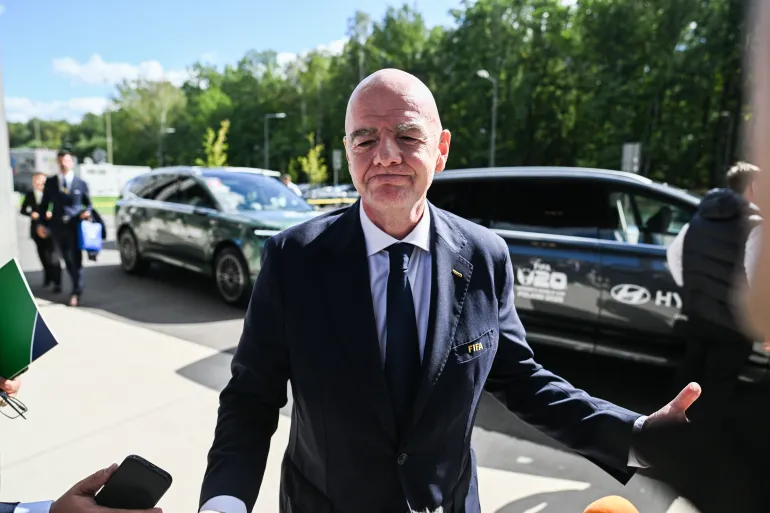
This escalation of legal pressure occurs as FIFA President Gianni Infantino faces criticism from three continental confederations regarding a previously proposed plan to seek private investment for a company to manage World Cup competitions. That initiative, which has since been abandoned, involved a project called FIFA Forward Enterprise that would have seen 20 percent of the company owned by private investors.
European Leagues noted that the controversy surrounding this proposed entity exposed the structural conflict between FIFA’s regulatory functions and its commercial operations. They argued that the situation illustrates how profit-driven motives can influence FIFA’s regulatory decision-making processes.