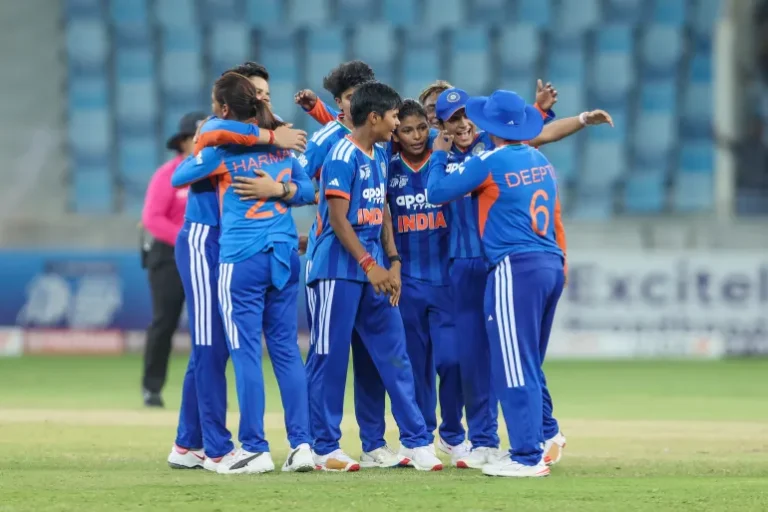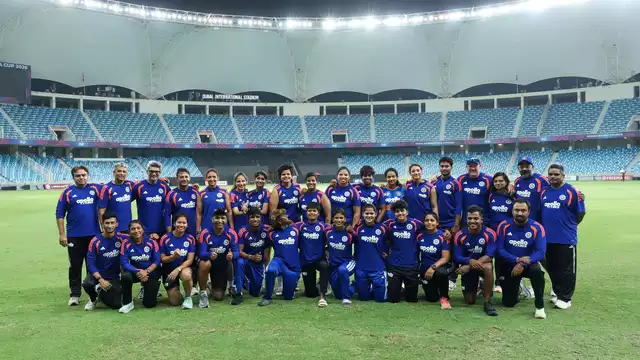

A blockbuster final awaits at the Dubai International Stadium as Asian cricket powerhouses India and Sri Lanka prepare to face off for the Women’s Asia Cup title. Both teams enter the championship match boasting unbeaten records, setting the stage for a compelling battle between India’s explosive batting lineup and Sri Lanka’s disciplined spin attack.
India secured their place in the final by defeating Bangladesh by 40 runs. Despite a challenging track that initially stifled scoring, India managed to post 149 runs. While the Bangladeshi bowlers applied early pressure, Shafali Verma’s aggressive 64, supported by valuable contributions from Richa Ghosh, Harmanpreet Kaur, and Deepti Sharma, provided a competitive total. India’s bowlers subsequently stifled the Bangladesh chase, with Deepti Sharma leading the attack by claiming three wickets.
Sri Lanka earned their final berth through a tense four-wicket victory over Pakistan in the second semi-final. Chasing a target of 131, the defending champions faced early instability, slipping to 33 for 4. A decisive 67-run partnership between Harshita Samarawickrama and Kavisha Dilhari turned the tide, before Nilakshi de Silva and Kaushani Nuthyangana anchored the team to victory with eight balls remaining.
The final is expected to hinge on the clash between India’s formidable top order and Sri Lanka’s left-arm spin options. Shafali Verma, who has amassed 168 runs, and Smriti Mandhana, with 154, have both maintained strike rates above 169 throughout the tournament, providing India with a significant advantage in the powerplay. To counter this, Sri Lanka is expected to rely on bowlers like Sugandhika Kumari and 17-year-old Chamudi Prabodhani, whose ability to exploit the slower nature of the Dubai pitch could be vital.
India’s bowling attack remains a primary strength, particularly with their spin contingent executing disciplined plans. Deepti Sharma has been in exceptional form, leading the tournament with 11 wickets at an impressive average of 3.63. Younger bowlers like Sri Charani have emphasized the importance of collaborative planning among the spinners to maintain pressure on opposition batters, a strategy that previously saw Pakistan bundled out for just 55 runs.
Sri Lankan captain Chamari Athapaththu continues to spearhead her side’s batting efforts. Reflecting on the semi-final win, Athapaththu expressed confidence in her team’s ability to overcome any opponent, provided they execute their tactical plans effectively. The depth of the Sri Lankan squad has also been highlighted by the contributions of players like Harshita, Kavisha, Nilakshi, and Kaushani, who proved their composure under pressure during the chase against Pakistan.
This showdown marks the third consecutive final between these two nations in recent memory. Historically, India defeated Sri Lanka by eight wickets in the 2022 final. However, the landscape shifted in 2024 when Sri Lanka claimed their maiden Women’s Asia Cup title by defeating India on home soil. With both teams seeking to cement their legacy, the final in Dubai promises an intense contest to determine the premier team in Asia.