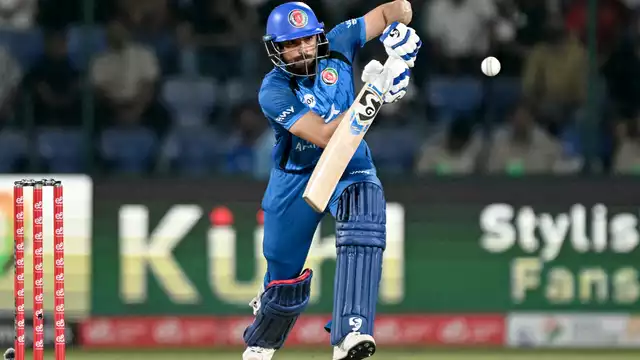
Ahead of a three-match T20I series against Zimbabwe starting in Sharjah on October 27, Afghanistan head coach Richard Pybus has issued a clear directive to his batting unit: improve dot-ball percentages and strike rates. Despite the talent within the squad, recent performances against India exposed critical vulnerabilities that need to be addressed to ensure consistent run-scoring. According to i think we’ve got to develop our batting and the nuance of our batting so that we can just keep the volume of runs flowing,” Pybus, Ahead of the T20Is against Zimbabwe. We need to look at our dot ball average and we’ve got to look at strike rates,” he said, adding that the series against India, despite the defeats, had helped him identify areas that needed attention. “For us as a side which is still in its developmental process as a team it (playing against India) has been an opportunity for me to be able to benchmark where we are against a side which is across formats if it’s not. With that benchmarking it’s just being able to see what our strengths and weaknesses are and I think for me as a coach it couldn’t have been a better gift,” he said. “It really isn’t nice getting beaten that’s for sure but if you’re going to have an opportunity to be able to benchmark where your side is at against the world champions with them playing at home it was really a fantastic opportunity. According to we have a new captain Ibrahim and it was, dare I say it, a baptism of fire, you know, to go to India, play in Delhi in front of a packed house, and on a small ground on a perfect batting surface against the world champions,”, Pybus. “It doesn’t get any tougher than that and I have to acknowledge that he managed the side well and stayed cool under pressure.
Reflecting on the past year, Afghanistan’s batting data shows a 43 percent dot-ball rate alongside a strike rate of 136.4. Pybus emphasized that while the team possesses high-quality all-rounders and formidable power hitters, the core objective is to refine their batting nuance. He stressed that the side must develop a more sophisticated approach to keeping the scoreboard moving efficiently.
Pybus noted that the recent series against India—while resulting in a defeat—served as a crucial benchmarking exercise. Despite the disappointing results, he welcomed the chance to test his players against a top-tier international side. He described the experience of playing in high-pressure environments, such as a packed stadium in Delhi, as an invaluable gift for a developing team aiming to identify its specific technical shortcomings. Number one it’s one of the top sides in the world.
The series also marked a significant milestone for Ibrahim Zadran, who assumed the T20I captaincy. While Zadran struggled with the bat during the India tour, Pybus remained firmly behind his skipper. He characterized the tour as a baptism of fire that allowed the young leader to gain vital experience. Pybus highlighted Ibrahim’s calm demeanor and ability to lead through his own authoritative performances as key assets that will only improve with time and further exposure to international leadership. According to pybus, however,, He was impressed with the way Ibrahim handled the responsibility in India and was not concerned about the opener’s returns with the bat after taking over the captaincy.
Addressing the transition from veteran player to captain, Pybus dismissed speculation regarding friction between the new leader and former captain Rashid Khan. He described the relationship as cooperative, noting that Rashid has been a model professional throughout the change. According to the coach, Rashid has provided the team with essential strategic input and remains a significant mentor, sharing his expertise without reservation.
Looking ahead, the coaching staff is focused on accelerating the development of the T20 group. Pybus believes that by dedicating more match time to this current core, the squad will evolve to better handle the complexities of the format. With the upcoming fixtures in Sharjah, the focus will remain on refining tactical execution to complement the team’s natural power-hitting capabilities.