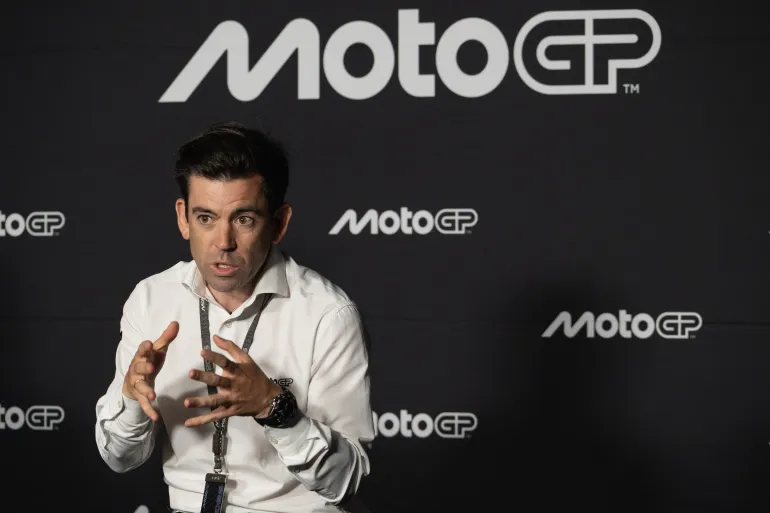
MotoGP deputy chief Carlos Ezpeleta has defended the decision to proceed with the Qatar Grand Prix, maintaining that it was the correct course of action despite regional tensions surrounding the United States-Israel war on Iran. While he acknowledged that it was normal for riders to express concerns regarding their safety in the Gulf region, he noted that management addressed those issues as thoroughly as possible using official intelligence. “We can unequivocally say that it was the right decision,” Ezpeleta told the Reuters news agency. “Obviously, it was normal that the riders showed their concerns, and I think that we mitigated those and confronted them to the best that we possibly could.”. “It’s just important in today’s day and age to follow official information and real intelligence versus speculation in the media and disinformation, which I think ultimately was what brought a lot of noise around the event itself.”. “We understand that it wasn’t a decision that was taken easily from their side, but it is a decision that was surprising to us for sure.”. And Ezpeleta acknowledged the need to improve that relationship with all stakeholders, the episode has also raised questions about how well MotoGP’s management communicates with riders.
Ezpeleta revealed on Wednesday that the decision-making process relied on vetted information provided by the Qatari government and diplomatic missions present in the paddock.
The race, initially scheduled for April, had been postponed to November 6–8 due to the regional situation. Ezpeleta emphasized that had conditions escalated further, the event would have been canceled or delayed again, but the situation remained manageable compared to incidents affecting other sporting events in the region.
In contrast to other major sports, such as football, tennis, golf, and cycling, which saw cancellations in Saudi Arabia following Houthi attacks on Riyadh’s international airport that left at least 12 people dead and 300 wounded, Qatar remained stable. Planning for the MotoGP event actually accelerated following improvements in the regional outlook during June and July. Tennis, golf and cycling – were cancelled or postponed in recent weeks after attacks by Yemen’s Houthis on Riyadh’s international airport last month killed at least 12 people and wounded more than 300, several Saudi Arabian sporting events – including football.
Despite the official stance, Yamaha chose to withdraw from the event, citing company-wide travel restrictions in the Middle East. The move resulted in the factory team and the satellite Prima Pramac squad sitting out, leaving a field of 18 riders. Ezpeleta expressed surprise at the decision, noting that management had provided detailed answers to all of Yamaha’s queries prior to the event.
While noting that Yamaha remains a valued partner of the championship, Ezpeleta confirmed that the unexpected absence would be subject to review by the FIM, the governing body of motorcycle racing. He declined to comment on potential penalties, stating that contractual matters remain between MotoGP and the team, while sporting consequences are for the FIM to decide. Yamaha and the FIM did not provide immediate comments regarding the situation. Ultimately, Yamaha is a great partner of the championship historically, and I’m sure they will continue to be,” he added.
The controversy highlighted broader concerns regarding communication between championship management and the riders. Ezpeleta admitted that improving this dialogue is a priority, given that teams and riders are the most vital components of the sport. He drew parallels to the 2011 Japanese Grand Prix, which proceeded despite the fallout from the Fukushima nuclear disaster, noting that historical instances often become clouded by misinformation rather than facts. “We’ve been managing the sport for 35 years and we’ve had situations like this before,” Ezpeleta added, pointing to the 2011 race in Japan held after the Fukushima nuclear disaster.
On the track, Aprilia’s Marco Bezzecchi secured victory in the Qatar Grand Prix. Meanwhile, Ducati’s sprint winner Marc Marquez finished second, effectively widening his championship lead to 60 points with only two rounds remaining in the season. Although Yamaha’s Moto2 team did travel to the event, their rider Izan Guevara—who is second in the championship—suffered a technical failure and failed to finish the race.
Ezpeleta concluded that despite the external noise and speculation that surrounded the event, he stands by the decision to race, maintaining that rights holders must ensure teams fulfill their contractual obligations to participate in the full season calendar.