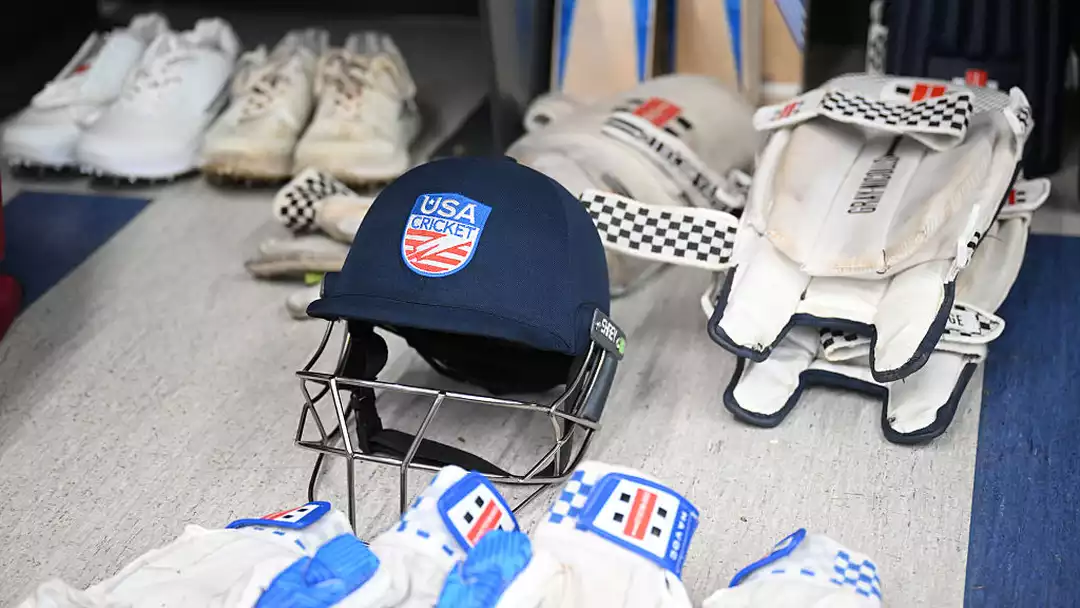
Since 2005, the governance of American cricket has been defined by a recurring cycle of instability, with two national governing bodies enduring four separate suspensions from the International Cricket Council (ICC). The case was withdrawn after about two years.
The United States of America Cricket Association (USACA) faced sanctions in 2005 due to governance failures, in 2010 for missing constitutional and electoral deadlines, and again in 2015 over broader financial and operational concerns before ultimately being expelled in 2017. Again in 2010 over missed deadlines for constitutional reform and elections, and again in 2015 over governance, finances, reputation and cricketing operations, the ICC suspended USACA in 2005 over its inability to establish legitimate governance.
Its successor, USA Cricket, has remained under suspension since September 2025, falling into such severe dysfunction that a federal bankruptcy court intervened, revoking its Subchapter V status and appointing a Chapter 11 trustee to manage the entity. What should have been settled by a routine email eventually spilled into the courts. September 2025: After years of disagreement over the long-form agreement with its commercial partner, American Cricket Enterprises (ACE), USA Cricket attempted to terminate the 2019 arrangement. It then filed for bankruptcy protection minutes before a scheduled court hearing in the ACE dispute. By January 2026: The bankruptcy court had effectively concluded that the existing leadership could no longer be entrusted to steer the organization through its financial crisis.
The boardroom atmosphere has frequently been characterized by sudden, aggressive power shifts. In one notable instance, newly elected club director Atul Rai bypassed established agendas to orchestrate the removal of former San Francisco 49ers executive Paraag Marathe as chairman during his very first board meeting. Other internal battles included a 2021 lawsuit where directors Venu Pisike and Srinivas Salver took legal action against fellow board members and the chief executive over constitutional amendments. By July 2024, directors Kuljit Singh Nijjar, Arjun Gona, and Patricia Whittaker formally alleged harassment and the suppression of dissent within the organization. What the boardroom fights have looked like. Former national captain and sitting director Sushil Nadkarni was disqualified from a board election because he submitted a link to his LinkedIn profile instead of a conventional résumé, at one point in USA Cricket’s turbulent existence. ‘s reporting at the time, the election of a new chairman was not even on the circulated agenda, and several directors were caught by surprise. These incidents look almost comical, but the record they belong to is serious, taken one at a time.
These administrative wars have exacted a heavy financial toll.
USACA reported liabilities of roughly $4.16 million in 2013 and $4.38 million in 2014, largely fueled by litigation.
During that period, roughly $500,000 was reportedly spent on legal disputes over a 16-month window. According to media, In 2012 put USACA’s legal spending at roughly $500,000 over the preceding 16 months, including the fight over the 32 disenfranchised leagues.
More recently, USA Cricket saw approximately $200,000 in costs linked to 2021 constitutional disputes, and by October 2025, director Atul Rai alleged that the organization had funneled nearly $500,000 into legal fees that year alone. Bankruptcy filings later identified prepaid retainers of $125,000 issued to Billion Law and Black Lion Services, funds that observers argue should have been allocated toward national teams, youth development, and infrastructure. Youth development and grounds went to lawyers, money that could have supported national teams.
The root of this instability often lies in the historical model where club and league operators exert control over the national board. While these immigrant-led leagues were essential in sustaining the sport for decades, their influence creates a closed ecosystem where small voting blocs can dictate outcomes. A stark example occurred during the 2012 presidential election, where 32 of 47 member leagues were disqualified from voting shortly before the poll, ensuring a win for the incumbent, Gladstone Dainty. Critics argue that until membership registration and voter eligibility are administered by neutral third parties, the threat of factional dominance will persist. The 2012 presidential election showed how the system worked. The remaining 15 all voted for the incumbent, Gladstone Dainty.
To secure a sustainable future ahead of the 2028 Los Angeles Olympics, reformists are pushing for a structure that limits the power of club operators. Current proposals for a board of nine to eleven directors include three independent members, but analysts caution this is insufficient. A stronger model would see independent directors—those without ties to existing clubs or leagues—holding five of eleven seats. Furthermore, these directors should possess professional experience in Olympic or major sports administration to ensure the body functions as a proper national governing organization rather than a collection of local interests. But it leaves room for the old politics to return once ICC membership is restored, the November reorganization plan installs three independent directors. Meanwhile, had unresolved audits and outstanding payments to deal with, the financially distressed body. The November reorganization plan proposes three independent directors, Selina Kaing, Patrick Singleton and Norman Wain, to lead the body out. Then in a minority on the board, also wrote to the ICC alleging misgovernance, the same two directors. Directors who challenged alleged misgovernance by their predecessors were later accused of similar conduct by rival factions.
External oversight remains a critical component of the proposed path forward. Calls have been made for the U.S. Olympic and Paralympic Committee (USOPC) or the ICC to conduct rigorous third-party vetting of all director candidates. Without such safeguards, the risk remains that the board could revert to the infighting that has previously disrupted national team training, forced the postponement of tours to places like Sri Lanka, and jeopardized commercial opportunities, such as a missed documentary deal with Netflix ahead of the 2024 T20 World Cup. The USOPC or the ICC should confirm that every director is fit to serve before they take a seat. The biggest showcase the sport has had in America, the letter was understood to have urged the ICC to strip USA Cricket of its hosting rights for the 2024 T20 World Cup. The men’s team’s training arrangements were disrupted, a planned tour of Sri Lanka was postponed, and commitments for the youth and women’s teams were left uncertain, while this was happening. And they remain the sport’s foundation, they funded competitions and secured grounds when no institution would.
As the sport prepares for the Olympic stage, the stakes are higher than ever. With new venues like the Los Angeles Knight Riders’ ground in Pomona and the proposed Washington Freedom stadium in Maryland emerging, the physical landscape of the game is evolving. However, unless the governance structure is rebuilt to prioritize transparency, independent leadership, and professional accountability, American cricket risks repeating the cycle that has seen critical funds diverted from the field to the courtroom.