India’s pursuit of a target at Mount Maunganui quickly devolved into a haunting sequence reminiscent of their 2019 World Cup semi-final exit. Within six balls, the visitors were reeling at 0 for 3, as Matt Henry dismantled the top order with a triple-wicket maiden. The familiar nature of the collapse invited immediate scrutiny, casting a shadow over India’s top-order consistency when playing in challenging conditions abroad. Clips of that Matt Henry spell from seven years ago started doing the rounds, six balls into India’s chase. Henry, the wrecker on both days, had doubled his wicket tally from Manchester to Mount Maunganui. They have also put an end to their ICC trophy drought and have also beaten New Zealand in an ICC final. Every top-order collapse since seems to have come with an added layer of scrutiny and scepticism. A question over the ability to make it count when it matters most. Virat Kohli’s (in)famous five words – “45 minutes of bad cricket” – remain a lasting memory from the Manchester debacle. He felt their shot selection could have been better, in his post-mortem. India crossed 300 in all three games. Somewhere between those extremes – and another 45 minutes of bad cricket – lies a more pressing concern: India’s ability to absorb a crushing collapse and still find a way to win when it matters most. Chasing 134, India had been pushed to the brink by a short-ball ploy, scraping through while seven down via DLS, less than a week ago.
Coach Gautam Gambhir rejected any attempt to downplay the performance, stating he would not brush such a collapse under the carpet. During his post-match press conference, Gambhir acknowledged the team’s failure to handle the challenging length, describing it as a half-half length that left batters stuck on the crease. He emphasized that players needed to show greater commitment rather than remaining rooted in place. And coach Gautam Gambhir’s concerns after the game only reaffirm that. The coach didn’t try to treat this as a one-off either. At least not publicly, neither Iyer nor Gambhir offered any tangible solutions.
The criticism regarding the pitch and movement was met with a blunt response from the head coach. While observers pointed to the wobble-seam delivery as a primary cause, Gambhir dismissed the technical debate. He argued that it is the batter’s responsibility to negate such conditions, insisting there were no unplayable deliveries and that the team’s inability to negotiate the first ten overs was the true issue. Even if Gambhir refused to acknowledge the brouhaha around the delivery type. “I don’t get into so much technicality, wobble seam and all that”, the wobble seam was making merry.
Shreyas Iyer, making his debut as ODI captain, offered a different perspective, noting the difficulty of the movement he faced. Shreyas Iyer couldn’t put bat on a repeat nip-backer.
He maintained that no one threw their wicket away, explaining that the ball’s movement made it nearly impossible to determine a set strategy from the crease. Meanwhile, the team faces the stark reality of recent performances, including struggles in Sri Lanka, Perth, and Cardiff, which contrast sharply with their high-scoring affairs on flat home tracks. Someone joked about why Indian broadcasters were displaying the Australian style of scoring. The contrast with the home flatbeds against the West Indies just days earlier couldn’t be starker.
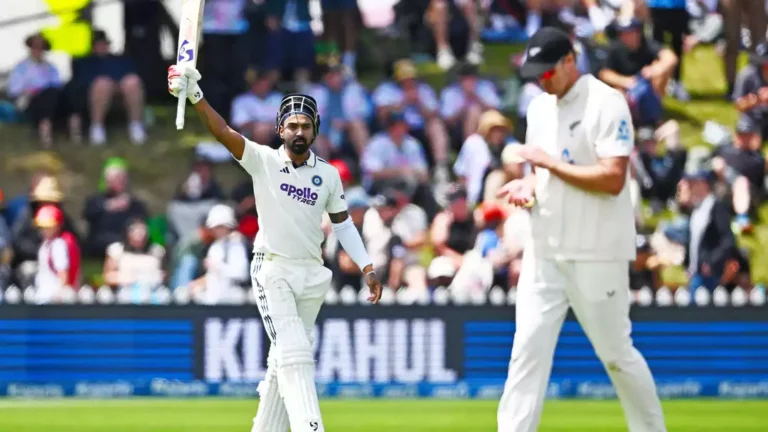
The reliance on middle-order stabilizers like KL Rahul, who was absent for this fixture due to a Test camp in Wellington, has become a point of concern. While Rahul proved his worth in previous matches, the current lineup’s inability to recover from early losses at 0 for 3 remains a significant hurdle. Gambhir emphasized that if the players are not feeling the sting of such a defeat, then there is a deeper problem within the squad.
As the team looks toward the series decider this Sunday, they carry the weight of being the world’s top-ranked side while wrestling with performance anxiety away from home. Gambhir remains optimistic about the quality within the group, urging his players to move on quickly and prove their adaptability. He noted that in India, the first 10-15 overs offer the best batting conditions, whereas the current tour has presented the most difficult phase of the match early on.
The coach stressed the importance of expectation management, suggesting that teams should aim for 30 or 40 runs without loss in the first ten overs rather than pushing for 70 or 80. This tactical approach is part of a broader need for India to reconcile their dominant home form with the harsh reality of their away performances. With the next World Cup on the horizon, the pressure to solve these long-standing issues has never been greater.
Gambhir concluded by expressing confidence that his team would respond effectively in the upcoming decider. He stated that despite the heavy 244-run loss, the squad possesses the necessary experience and talent to bounce back. The upcoming match serves not just as a series conclusion, but as a critical dress rehearsal for handling pressure in alien conditions.