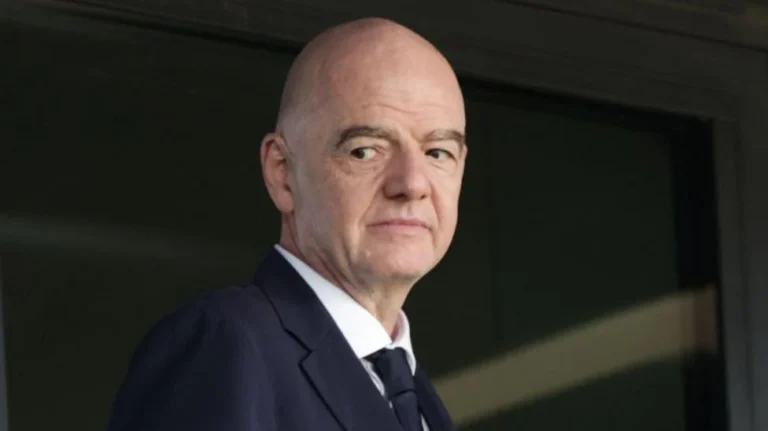
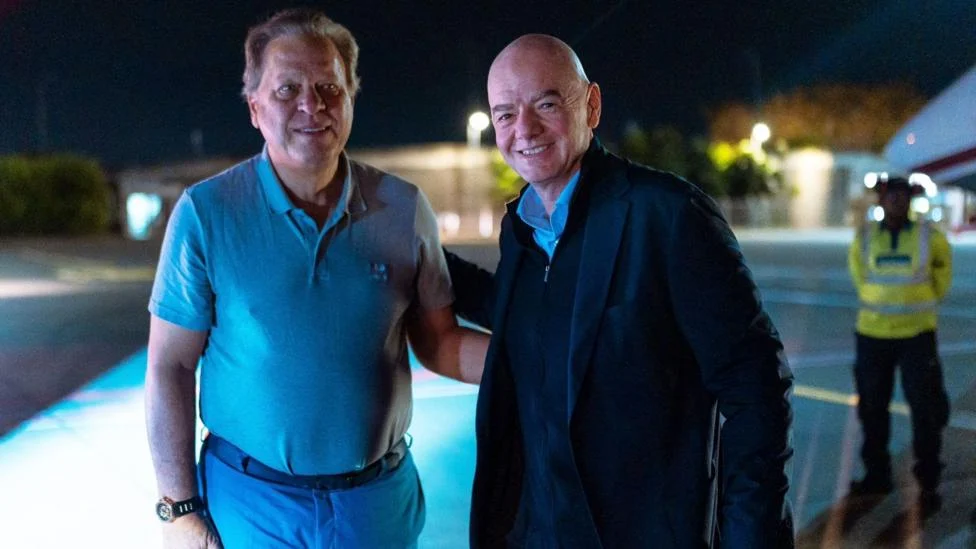
Gianni Infantino recently arrived in Cali, Colombia, where he was greeted on the runway by the president of the Colombian Football Federation, Ramon Jesurun. Jesurun, a close ally of Infantino’s, saw it as a chance to show his support, with the two men smiling in a photo opportunity for the federation’s Instagram account. Infantino had not travelled to Colombia for any run-of-the-mill meeting; he was there to attend the inauguration of the country’s new president, Abelardo de la Espriella. Infantino was accompanied by Alejandro Dominguez, the president of South America’s football governing body, Conmebol.
This high-profile appearance reflects the life of a Fifa president, a role that involves building ties with some of the most powerful people in the world. This is clearly demonstrated by Infantino’s relationship with US President Donald Trump. Before the biggest scandal to hit his tenure—the aborted Fifa Forward Enterprise plan—Infantino was an incredibly powerful figure who appeared bulletproof. Now, after an apology and a stated desire to withstand the backlash of his plan to sell a 21% stake in the men’s World Cup commercial and ticketing business to a private equity firm, Infantino appears to be trying to return to business as usual.
Uefa’s threat to boycott Fifa tournaments still stands, a tension that will be tested with the Fifa Under-20 World Cup set to kick off in Poland in 29 days. Perhaps emboldened by the support he has received from outside Europe in recent days, Infantino is not going to stand down easily. Earlier this week, a cavalcade of blacked-out Mercedes, flanked by police cars, rolled into the Fifa headquarters in Rabat, Morocco. Infantino had summoned a select few members of the Fifa management board there to discuss the fallout of his controversial investment proposal.
This is how the Swiss-Italian travels, often utilizing a Qatar Airways Executive jet made available to him. The plane enabled him to take up to three flights a day, watching two games throughout the 2026 World Cup. It also enables him to travel the globe, visiting Fifa’s official offices like the one in Rabat, where he was based over the past week as the Fifa Forward Enterprise controversy developed. Such arrivals are distinctly presidential, though they mirror the status of a head of state more than the leader of a sports governing body.
In his role, Infantino is expected to visit the 211 member nations to see the grassroots projects Fifa has funded. Part of his remit is to unify football, which he argues cannot be achieved from within the Fifa headquarters in Zurich. It requires international travel to attend confederation meetings and the global tournaments Fifa organises. Infantino needs to build relationships with officials and politicians to maintain this influence.
However, this approach has faced scrutiny. In April, before the Fifa Congress in Vancouver, local authorities rejected a request for a level-four motorcade, usually reserved for heads of state or the Pope. New Zealand police also confirmed they had declined a similar request during the 2023 Women’s World Cup. Alongside the cavalcade of cars and the private charter flights comes a large salary, which is three times what he first earned when elected in 2016.
Infantino, who was paid about £1.3m ten years ago, now takes home about £4m annually—a base salary of £2.2m plus a confirmed variable bonus payment of £1.8m. For comparison, his predecessor Sepp Blatter was paid a £2.6m package for his final year as Fifa president. Additionally, Infantino receives a ‘per diem’ to cover expenses and living costs, worth £20,500 a year on top of his salary. As the head of the most popular sport in the world, Infantino argues that by driving record revenues and funding for member associations, he has proven he is worth the compensation.
Infantino’s alliance with Donald Trump seemed to have elevated his status even further. The US president previously stated he had called the Fifa president, who he claimed “made another great decision.” However, many in world football felt that this focus began to come at the expense of his responsibilities in football. In May 2025, Infantino had been on a diplomatic tour of the Middle East with Trump and turned up two hours late for the Fifa Congress in Paraguay.
During that period, Uefa accused Infantino of prioritising “private political interests” and staged a walk-out. Despite these accusations, the International Olympic Committee, of which Infantino is an invited member, said its rules on political neutrality had not been breached. The controversy surrounding the Fifa Forward Enterprise plan remains a significant hurdle for his administration.
Infantino has publicly apologised for the proposal, yet he continues to operate with the same high-level diplomatic engagement. His ability to navigate these political waters while maintaining the support of non-European confederations remains the defining feature of his presidency. The coming weeks, particularly the Under-20 World Cup, will serve as a critical test of his authority.
The logistical demands of his position remain immense. Between managing the fallout of the investment plan and maintaining his global travel schedule, the pressure on the Fifa president is higher than at any point in his decade-long tenure. Whether he can successfully pivot back to a focus on football governance while retaining his presidential lifestyle remains an open question for the organization.
Ultimately, the balance between his role as a global sports administrator and his desire for political influence continues to define his tenure. As he moves between continents, the contrast between his stated goals of football development and his methods of operation continues to spark debate among member associations and international stakeholders alike.
Infantino, who was paid about £1.3m 10 years ago, now takes home about £4m – a base salary of £2.2m plus a confirmed variable bonus payment of £1.8m.
There was also the Fifa Peace Prize, awarded to Trump weeks before the US invaded Venezuela to depose president Nicolas Maduro and launched air attacks on Iran.
This was heightened when USA striker Folarin Balogun escaped a ban after being sent off at the World Cup.