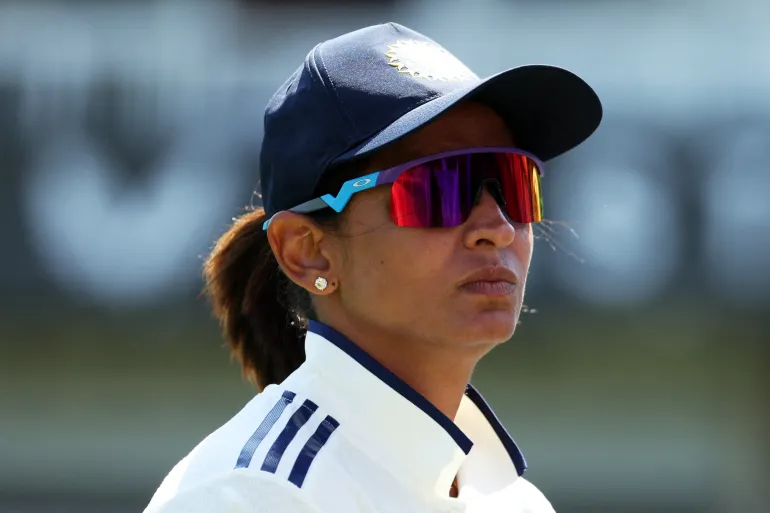
Harmanpreet Kaur has concluded a landmark decade of leadership, announcing her decision to step down as India’s all-format women’s cricket captain on October 6, 2026. The 37-year-old confirmed the news via social media, noting that while the choice was far from simple, it followed a period of intense reflection regarding her future and the team’s evolution. Kaur emphasized that her career as an international cricketer will continue despite relinquishing the captaincy.
The leadership transition follows high-level discussions regarding the future of the national program involving Kaur, her longtime deputy Smriti Mandhana, and coaching staff. Consequently, Mandhana has been named as her successor. This move comes at a pivotal time as the team prepares for the inaugural ICC Women’s Champions Trophy in early 2027 and the Los Angeles 2028 Olympic Games. Which took place a day earlier between Kaur, Smriti Mandhana, head coach Amol Muzumdar and Devajit Saikia, honorary secretary of the Indian cricket board, the announcement was made after discussions on the future of Indian women’s cricket.
Kaur’s tenure, which began in 2016 following a disappointing T20 World Cup, was defined by a shift toward aggressive, modern cricket. Her record remains impressive, spanning five Test matches with an 80 percent win rate, 51 ODIs at a 58.82 percent win rate, and 155 T20Is with a 59.35 percent win rate. Her final assignment saw the team secure a gold medal at the Asian Games in Japan, occurring just nine days after she guided the squad to an Asia Cup victory in the United Arab Emirates. Where India stepped on the podium as gold medallists, the Punjab-born top-order batter’s last game in charge was the recently concluded Asian Games in Japan.
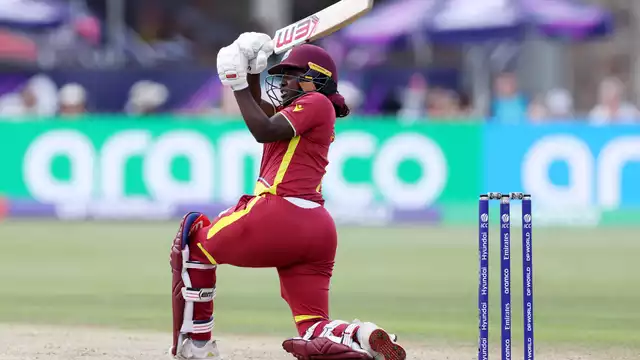
The defining moment of her captaincy—and perhaps Indian women’s cricket history—arrived in 2017. During the ODI World Cup semifinal against Australia, Kaur smashed an unbeaten 171, a performance that not only propelled India into the final but fundamentally challenged the stereotype that female players lacked the power to clear the rope. This shift in mindset was crucial, as she recalled that early in her career, peers often discouraged her from attempting big shots.
Her influence on the team’s philosophy was profound. Before 2017, the team often faltered in the T20 format. However, under her guidance, India reached their first T20 World Cup final in 2020 and secured a silver medal at the 2022 Commonwealth Games. Throughout this journey, Kaur fostered a more athletic and fearless team culture, famously pushing for increased fitness standards after a difficult home tri-series in 2018. A year after Kaur was appointed captain in the Twenty20 format and earmarked to take over the reins across all formats of the game, their breakout run at the one-day international (ODI) World Cup ended in heartbreak in 2017. Kaur’s India beat then-defending champions Australia in a sensational come-from-behind World Cup semifinal before overcoming a resolute South Africa in the final to be crowned world champions for the first time – in front of adoring home fans. The medals and trophies tell one part of Kaur’s tale as captain.
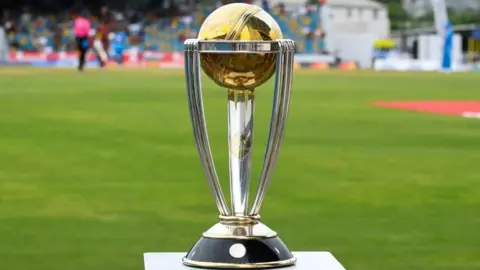
Kaur’s long-standing pursuit of a maiden global trophy culminated in November 2025, when India captured the ODI World Cup. In a poetic turn of events, it was an 89-run contribution from Kaur and a player-of-the-match 127 not out from Jemimah Rodrigues that eliminated Australia in the semifinals, burying the heartbreak of previous tournament exits. The biggest question centred on an elusive maiden World Cup title and India’s failure to cross the final hurdle at major tournaments. The what-if was finally buried, in November 2025.
The impact of her leadership was frequently noted by international counterparts. Australian captain Alyssa Healy remarked in 2023 that Kaur’s efforts in moving the game forward and leading a new generation of players were extraordinary. Players she mentored, such as Shafali Verma—whom Kaur backed as a 16-year-old during the 2020 World Cup—have credited her with shaping the current identity of the squad.
Reflecting on her growth as a leader, Kaur acknowledged that she had to moderate her natural on-field intensity. She noted that her personal evolution from a volatile player to a composed strategist directly influenced the team’s ability to secure major tournament results. By leaving her post on her own terms, Kaur departs having successfully transitioned the side from a team that feared the heavyweights into world champions who now define the standard for the modern game. Not always easy, and sometimes came at a personal cost.”, decisions that were not always understood.