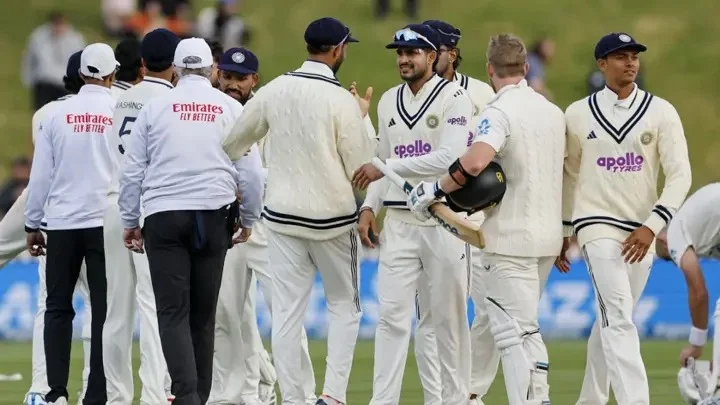
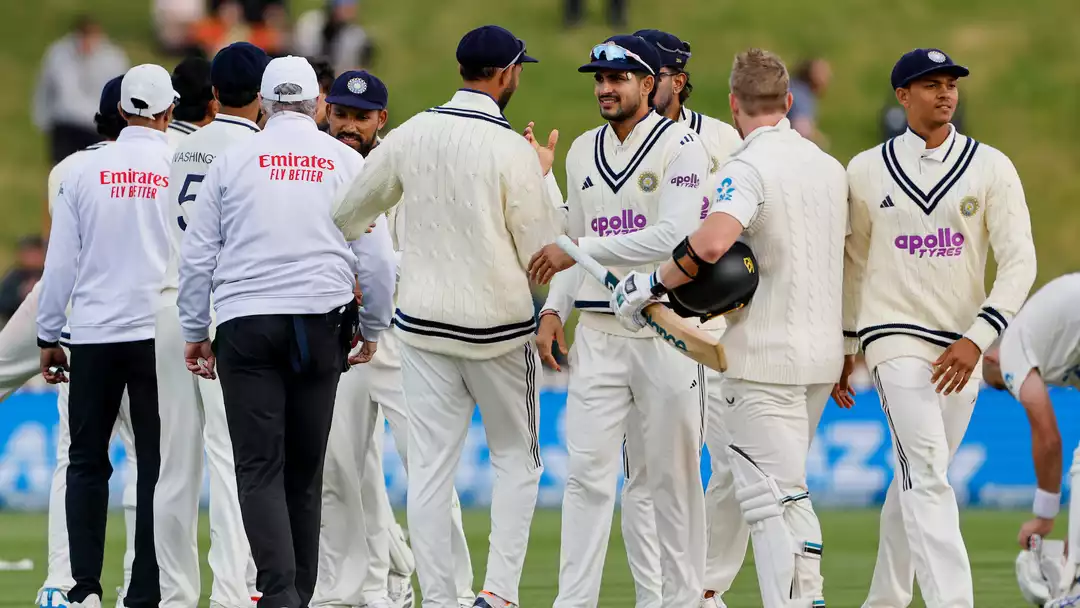
The first Test at the Basin Reserve concluded in a farcical display as both teams conceded to a draw on a pitch that offered almost no assistance to bowlers throughout the five-day encounter. The final session saw a surreal atmosphere with Indian fielders appearing disengaged, Dhruv Jurel bowling long-hops, and Shubman Gill signaling the end of the contest with 15 overs still remaining. The lack of competitiveness was a direct result of a playing surface that remained remarkably intact, with even the cracks appearing at the end of day four failing to cause the ball to deviate or misbehave. Dhruv Jurel bowling long-hops and getting cheered by a clearly bored slip cordon. The rest of the Indian team floating around the Basin Reserve outfield that had witnessed a glut of runs over the previous five days. Forget crumble, they’d had enough of toiling away on a thankless pitch that had refused to deteriorate. Even the cracks that began to develop understandably towards the end of Day 4 were intact enough for the plates not to move or for even the edges of the cracks to disintegrate enough for the ball to misbehave to any exte.
Shubman Gill’s decision to abandon the pursuit of victory with 90 balls left in the game drew criticism, yet the reality of the surface rendered such efforts largely futile. The pitch was so uncharacteristically benign that even the New Zealand bowlers frequently quizzed broadcasters during morning pitch reports, with one admitting, “Here for any idea, because I have none.” Throughout the match, 407 overs were bowled with only 24 wickets falling, five of which occurred within the opening 29 overs of the contest. There’s been some criticism of Gill’s decision to pull the plug with 90 legal deliveries still left in the Test. According to so much so that a couple of the New Zealand bowlers would listen to every pitch report that took place in the mornings and quiz the broadcasters as to what plans they might have for success on this bizarrely uncharacteristic Basin surface. “Here for any idea, because I have none,” one of them, Pretty plainly.
India had initially positioned themselves for a potential victory after a strong opening session on the final day, where they successfully dismissed overnight batters Devon Conway and Rachin Ravindra. However, their hope of securing a 1-0 series lead proved to be wishful thinking. As the day progressed, the Indian bowlers struggled to extract any life from the deck. Even the introduction of Jasprit Bumrah and Prasidh Krishna in the final session failed to trouble Daryl Mitchell and Glenn Phillips, who looked remarkably comfortable defending against both pace and spin. Jasprit Bumrah ambling back to the field after having been off it for nearly eight overs. Only for Gill to signal to Daryl Mitchell that his team was done, the umpires were just about to call for drinks to signal for the final hour or the start of the mandatory overs. Which started with the Black Caps needing to survive 39 overs, Gill finally brought Akash Deep back on after a couple of brief bursts from Bum, after having thrown the ball around to his fast bowlers in the final session. There were a few signs leading up to Gill’s decision to call it off that the visitors had grudgingly acknowledged the inevitability of their mission on Monday. And you couldn’t blame the Indians who had tried everything they could, a few times over as well, but to no avail, the wheels were coming off. With the hardness of the ball allowing Mitchell and Phillips to trust their defence and the consistency of the bounce off the pitch, but even that aspect of the challenge was negated when the second new ball was taken.
The frustration was palpable as India experimented with part-time bowling options, including Yashasvi Jaiswal and Jurel, while the standard fielders drifted around the outfield. A moment of levity occurred when Washington Sundar pushed for a DRS on a hopeful lbw appeal. Rishabh Pant accurately shouted that the ball was “pitching outside leg-stump, mate,” and a fielder confidently predicted “all three greens,” which proved to be an error as the replay confirmed the ball had indeed pitched far outside the line.
Theories regarding the lackluster performance of the wicket included potential inconsistencies in the new ground-staff’s preparation, the absence of Wellington’s typical windy conditions, or errors in the initial grass coverage. Regardless of the cause, the pitch remained stubbornly flat. The only minor challenges occurred when deliveries from the RA Vance Stand skidded low, one of which dismissed Tom Blundell, but these incidents were rare exceptions. A late opportunity to break the partnership emerged when a delivery from Rajwinder Kamboj caught Mitchell’s gloves, yet the chance evaded Devdutt Padikkal at short leg, cementing the draw as the inevitable conclusion to an underwhelming Test match. The moisture content not being consistent with what’s generally the case here, or the wrong colour of grass-cover at the start, maybe it was the new ground-staff or the fact that windy Wellington didn’t live up to its moniker for the first four days.