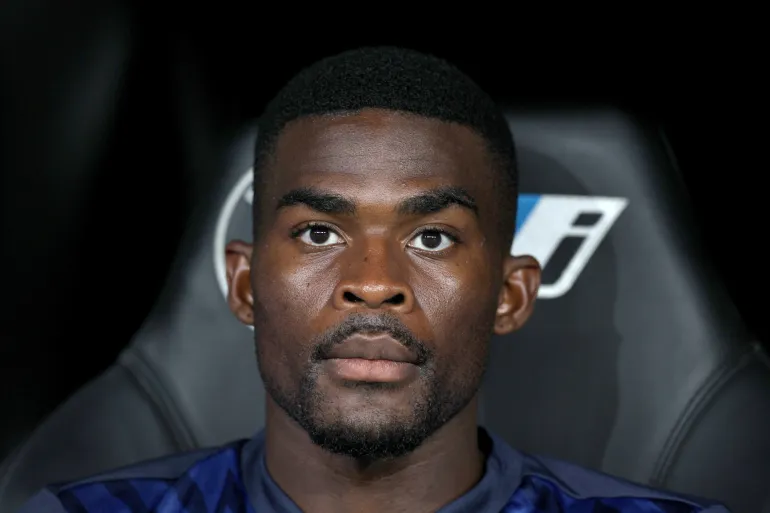
Andorra goalkeeper Jesus Owono has become the center of a major controversy after a collision during Monday’s La Liga 2 match resulted in the tragic death of Tenerife forward Jesus de Miguel. The 30-year-old forward passed away at a hospital in Santa Cruz on Tuesday morning after suffering a cardiac arrest triggered by a high challenge from the goalkeeper during stoppage time. How did Owono react to the collision. He remained on the field until he was led away by club officials and down the tunnel at the same time that De Miguel was being rushed off the field at the opposite end of the stadium on a stretcher to a waiting ambulance, with videos posted online showing Tenerife fans in the stands chanting ‘assassin’ at Owono for his part in the incident. The reaction to Owono’s challenge on De Miguel is that it was widely considered reckless and using excessive force. Thankfully, incredibly rare, and there are no precedents established in a tragic case like this, the death of a player due to an act on the field in the midst of a match is.
Owono, who was issued a straight red card for the incident, is currently facing global criticism and intense social media backlash. In the wake of the tragedy, local authorities, specifically the Homicide Group of the National Police in Santa Cruz, have reportedly opened an investigation to determine the exact circumstances surrounding the player’s death.
Born in Bata, Equatorial Guinea, the 25-year-old goalkeeper moved to the Spanish Basque Country as a child. His football development began at San Sebastian’s Antiguoko before he advanced through the ranks at Real Sociedad. After joining Alaves in 2017, Owono made his La Liga debut in January 2022, eventually joining Andorra on a permanent deal this past August following a successful loan period. A youth club in San Sebastian, at the age of eight, but after moving on to Real Sociedad, he played for the Basque Country’s representative side at under-16 level, his first club was Antiguoko. Becoming the first international born in his country to appear in La Liga, he joined Alaves in 2017 and worked his way through the youth ranks before making his first-team debut in a 1-1 draw against Real Sociedad in January 2022. Keeping six clean sheets in 20 league games before earning a permanent move in August and signing a two-year deal, he went on to make 20 appearances in the league and Copa del Rey but spent last season on loan with La Liga 2 side Andorra. Playing every minute of their three group games in the 2025 AFCON edition and both their AFCON 2027 qualifiers against DR Congo and Sierra Leone in September, owono made his Equatorial Guinea debut shortly after turning 18 in March 2019 and has gone on to represent his country 46 times.
Regarding the on-pitch collision, the incident occurred as 10-man Andorra attempted a late comeback against a 2-0 deficit. When the ball was cleared toward the halfway line, De Miguel appeared to be in a position to attack, prompting Owono to sprint out of his area. During the aerial challenge, the goalkeeper’s knee appeared to strike the forward in the chest and head. Following the clash, Owono initially walked toward the touchline expecting his dismissal, but he soon returned to the pitch to join concerned teammates as medical staff attended to the prostrate player. After colliding with De Miguel in the centre circle, Owono did not turn back to look at his opponent on the ground but immediately began walking towards the touchline, anticipating the red card which Manuel Angel Perez Hernandez swiftly brandished. However, as he walked off, after exchanging a handshake with teammate Nacho Quintana, he turned back as medical staff were beckoned frantically onto the pitch and jogged to join players surrounding De Miguel as he lay prostrate on the turf. Seeking to complete an unlikely comeback from 2-0 down with just seven minutes of normal time remaining, the keeper was standing well outside his area as 10-man Andorra piled on late pressure.
The public reaction to the challenge has been polarized and severe. Many online users have demanded a lifetime ban for the keeper, while his personal profiles have been flooded with racist abuse and derogatory labels. Within the sporting framework, the Spanish Football Federation’s Disciplinary Code mandates a suspension ranging from four to 12 matches for violent conduct that causes serious injury.
Beyond the sporting consequences, legal experts are weighing whether the incident qualifies as criminal negligence. Yes, and they almost certainly will.
Spanish Penal Code Article 142 differentiates between gross and less serious negligence in manslaughter cases. Can a footballer be charged with negligent manslaughter.
Potential outcomes range from significant fines to a prison sentence of up to four years if gross negligence is proven. If proven, can carry a prison sentence of up to four years, while the lesser charge carries a fine calculated over three to 18 months, gross negligence.
As the situation develops, authorities continue to assess the specific context of the challenge to determine if criminal charges are warranted, a development that remains unprecedented in such a tragic professional football context.