Tensions between Ireland and Israel reached a critical point during their second Nations League group stage match, bringing a volatile two-week period to a close. The League 3 Group B fixture, held at the neutral TSC Arena in Backa Topola, Serbia, finished in a 1-1 stalemate on Sunday, occurring behind closed doors amid significant political scrutiny. Here’s a look at the events surrounding the fixture.
The match followed a confrontational first encounter on September 27, where Ireland secured a 3-0 victory. Throughout this period, the Irish team faced immense pressure from home supporters to boycott the fixtures due to strong national alignment with the Palestinian cause. Reflecting on the difficulty of these two weeks, Ireland manager Heimir Hallgrimsson remarked that the mounting pressure had reached a breaking point. “I wouldn’t wish for any national team to go through what we have gone through these two weeks.
Allegations of misconduct emerged during Sunday’s game, with reports stating that Irish coach Damien Doyle accused an Israeli player of spitting at him following the half-time whistle. Addressing the incident, Hallgrimsson confirmed his presence but declined to provide specific details, noting that the matter would be handled by a disciplinary committee. Conversely, Israel coach Ran Ben-Shimon stated he was in the dressing room at the time and did not witness the alleged event, promising to review the situation. When I’m going to see and check, I will get back to you with the answer,” he told reporters. The Icelandic coach went on to talk about the toll it took on his players.
As of now, there is no formal confirmation from UEFA regarding potential sanctions against the players involved, and the governing body has not yet commented on the initiation of an inquiry. While player-to-player spitting is not unprecedented in global football, this represents a unique flashpoint for these two national sides. So maybe UEFA just needs to step in and do something.”.
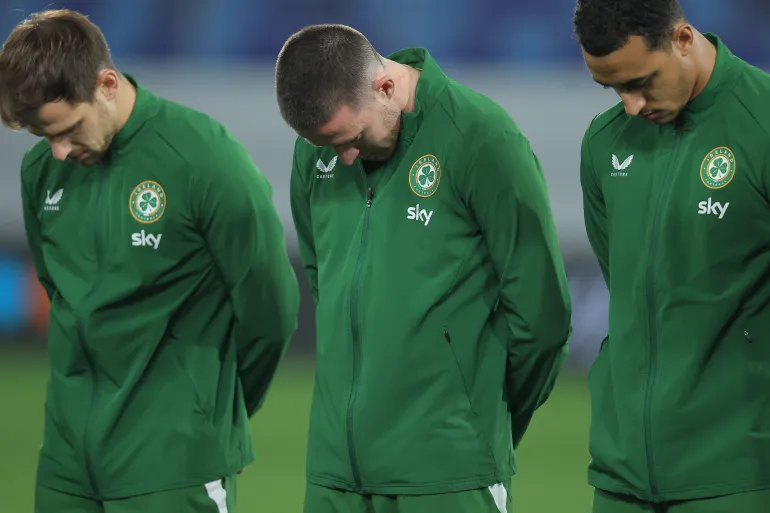
Several protest measures defined the series, authorized by Football Association of Ireland (FAI) CEO David Courell. Before the first match, the FAI notified their opponents that Irish players would abstain from customary pre-match handshakes, a move accepted by UEFA. Additionally, no pennants were exchanged, Irish players wore black armbands to honor victims of the war in Gaza, and team members bowed their heads during the Israeli national anthem.
The symbolic displays continued on the pitch, where Irish players donned black armbands for Gazan casualties. Meanwhile, the Israeli squad wore armbands marked “7.10,” referencing the October 7 Hamas attacks in southern Israel that preceded the ongoing conflict. Similar commemorative gestures have been documented in international sports previously, such as Portugal’s tribute to Diogo Jota in 2025, Premier League teams honoring Pele in 2022, and the 2020 tribute to Kobe Bryant by AC Milan and Torino.
The two fixtures marked the only scheduled meetings for the teams in the current Nations League cycle. Expressing relief that the series concluded, Hallgrimsson suggested that UEFA should re-evaluate placing such teams in the same group, emphasizing the heavy emotional toll the matches inflicted on his squad. The manager noted that public sentiment in Ireland remains deeply supportive of Palestine. There’s not many countries that support Palestine as much as Ireland does.”.
Regarding UEFA’s draw policy, the organization maintains a computer-generated pot system but includes specific “prohibited clashes” to avoid geopolitical friction. While the 2026-27 cycle only lists the Bosnia and Herzegovina versus Kosovo matchup as a restricted pairing, the executive committee manages various other geopolitical constraints. Yes, while UEFA uses a computer-generated system to sort the 54 nations into four pots to create groups, it has certain draw conditions in place to keep certain teams apart due to geopolitical or travel restraints.
Internal challenges also impacted the Irish roster, as Finn Azaz was benched for both matches. Hallgrimsson explained the decision by citing the player’s Israeli heritage, noting that the intensity of the situation made it impossible for him to be prepared for the competition. The manager emphasized that prioritizing the player’s well-being was the primary factor in his exclusion from the lineup.