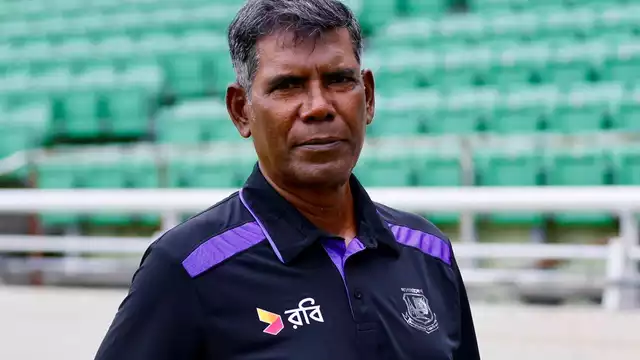
Former Bangladesh women’s team head coach Sarowar Imran contends that his tenure ended because he attempted to challenge his players’ comfort zones, a move he believes was unfairly characterized as a personality clash. Following the expiration of his contract in October 2026, after the conclusion of the Asian Games, the Bangladesh Cricket Board (BCB) opted not to renew his deal, naming David Hemp as his successor while citing concerns regarding Sarowar’s temperament. According to sarowar, who guided Bangladesh as head coach during their inaugural Test against India in 2000,, The board did not communicate with him to hear his side of the story before removing him from the women’s team coaching. That is the reason our team is still the same as it was five years back. I feel a coach ensures his job by doing this (adjusting and remaining silent).
Reports indicate that certain senior squad members had approached the board to voice discomfort with Sarowar’s coaching methods. While there was earlier talk of the board issuing a show-cause notice to Sarowar due to post-Asian Games dressing room unrest, the BCB ultimately refrained from such action, acknowledging his lengthy service to the sport. However, Sarowar claims the board terminated his position without ever discussing the matter with him directly, noting that his only official communication was a notification that he would not lead the squad during the tour of Australia. Expressing discomfort with his approach, understands that some senior players had also complained to the board about his behaviour. The BCB, however, eventually dropped its plan to issue the notice, taking his long-standing service to Bangladesh cricket into consideration.
Speaking to Ekattur TV on November 10, Sarowar described a culture of complacency within the team. He observed that support staff, including batting and spin coaches, were hesitant to challenge the cricketers. He pointed to specific instances where players would limit their training, such as stopping after bowling only 30 deliveries, with coaches failing to intervene. By stepping in to demand higher standards and addressing players directly, Sarowar said he was labeled as ill-tempered, though he insists he was simply maintaining professional discipline. This is all the communication I had with BCB,” Sarowar was quoted as saying by Ekattur TV on Tuesday (November 10). “As far as my ill temper is concerned when I entered the women’s team, what I saw was that there from bo. A spinner after bowling 30 deliveries tells the coach that she won’t bowl any more and the coach agrees. They listen to whatever the women cricketers say and they cannot improve living in this comfort zone. When I needed to scold them I did that and if you say this is ill temper in that case I don’t feel Bangladesh cricket can improve,” he said. “I felt I could improve them and had seven to eight tours and everything ended. That will never happen,” he said, if I feel that I will be world champion only by bowling 30 balls. One or two batters bat for the whole day and after seeing all these I started interfering.
Sarowar emphasized that a coach must remain a professional figure rather than a friend, noting that friendship with players complicates objective decisions like dropping underperformers. He argued that previous coaching staff members may have compromised their principles to secure their own jobs and avoid friction with the players. He maintains that unless the team moves beyond these comfort-driven habits, genuine growth will remain elusive.
A primary concern for the former coach involves the current physical standards of the squad. Sarowar asserted that over half of the first-choice XI do not meet the necessary fitness benchmarks for elite competition, describing most as below average. He stressed that a high-performance mindset is impossible to sustain with such physical limitations, noting that real success requires more than low-intensity training sessions.
Regarding internal team dynamics, Sarowar stopped short of confirming formal factions but noted a clear disparity in team cohesion. He suggested that captain Nigar Sultana did not enjoy close professional relationships with every member of the squad. Despite the criticisms leveled against him, Sarowar remains firm in his belief that his approach was necessary for improvement, stating that he refuses to work merely for show or to protect his own popularity at the expense of player development.