A remarkable transformation of local tradition into global sporting success has unfolded at the Youth Olympics, currently being held in the Senegalese capital of Dakar and the nearby locations of Saly and Diamniadio. Running from October 31 to November 13, the games have seen local athletes claim victory on the sand, with their success rooted in the deep cultural heritage of Senegalese wrestling, known as laamb. A new star was born, beneath the Senegalese flag’s green star.
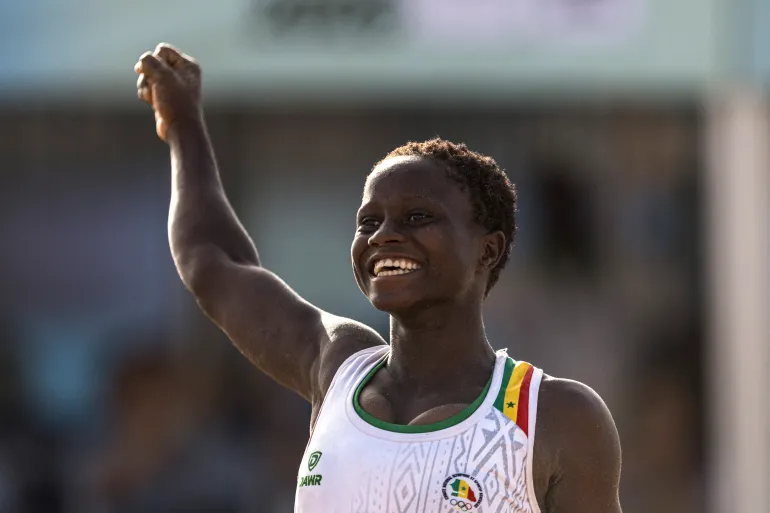
Sixteen-year-old Elisabeth Diatta, hailing from the Casamance region, provided one of the tournament’s most defining moments. The referee’s look, the confirmation, the disbelief, then came the whistle. Defiant, before wrapping herself in green, yellow and red, diatta danced.
Originally a footballer, her path to the mat began unexpectedly when she filled in for her injured sister, Jeannine, at a sports camp. Her transition proved fruitful, as she triumphed over Japan’s Reisa Kojima 5-1 in the 55kg final. The victory was historic, marking Senegal’s first Youth Olympic gold medal. Diatta noted that she faced significant pushback from adults who claimed wrestling would diminish her femininity, yet she persisted in the sport as an act of teenage defiance. She wasn’t even supposed to be there. The turn, the “Siu!”, she celebrated like Cristiano Ronaldo; the leap. A teenage girl had delivered a medal in a sport so often described as belonging to men. According to “They, Wrestling would make me less feminine,” explains Diatta – the “they” she is referring to are the adults around here.
Watching from the sidelines, coach and two-time Olympian Isabelle Sambou expressed pride in the achievement. “I wanted to win gold for Senegal when I was an athlete,” Sambou shared. “Today, I have my reward.”
The momentum continued with 16-year-old Maguette Diop, who demonstrated exceptional resolve in the boys’ 80kg category. Following a difficult loss to Iran’s Reza Jalilian in the under-17 world championships in Baku on August 27, Diop dedicated months to intensive training. Facing Azerbaijan’s Nihad Suleymanli, a two-time under-17 world champion, in the final, Diop overcame a challenging start. After a review of the bout, a decision initially favoring Suleymanli was reversed, securing a 4-0 victory for the Senegalese wrestler. She would soon have another reason to celebrate as another Senegalese teenage hopeful, 16-year-old Maguette Diop, stepped into the wrestling circle later on Saturday.
Success for the hosts extended further when Ndeye Khady Anna Diatta captured a third gold medal for the nation in the 45kg category the following day. “I hope this experience will give girls courage and determination,” she remarked after her win.
The path to these victories involved adapting to the specific demands of beach wrestling. Unlike traditional Senegalese wrestling, where the objective is to force an opponent to the ground—often onto their back, knees, or buttocks—with no formal points system, beach wrestling operates under a structured set of rules. In this format, takedowns and forcing an opponent out of the circle award one point, while throws that land an opponent on their back earn three points and end the bout. Bouts are capped at three minutes, and the first athlete to reach three points wins.
This cultural practice of wrestling carries immense weight in Senegal, serving as a symbol of neighborhood and village pride. Traditional bouts are often accompanied by the rhythmic sounds of sabar drums and are steeped in ritual, with participants seeking spiritual protection through amulets and prayers. Even as professional arenas remain male-dominated, the success of these teenage athletes highlights a shifting landscape, particularly in regions like Casamance, where women have long participated in the sport.
By the conclusion of competition on Thursday, Senegal had secured a notable position in the medal table, standing in sixth place with three of their five gold medals won in beach wrestling. For the host nation, the impact extends beyond the rankings, offering a powerful representation of local youth excelling on the world stage through a sport that has defined generations of Senegalese identity.