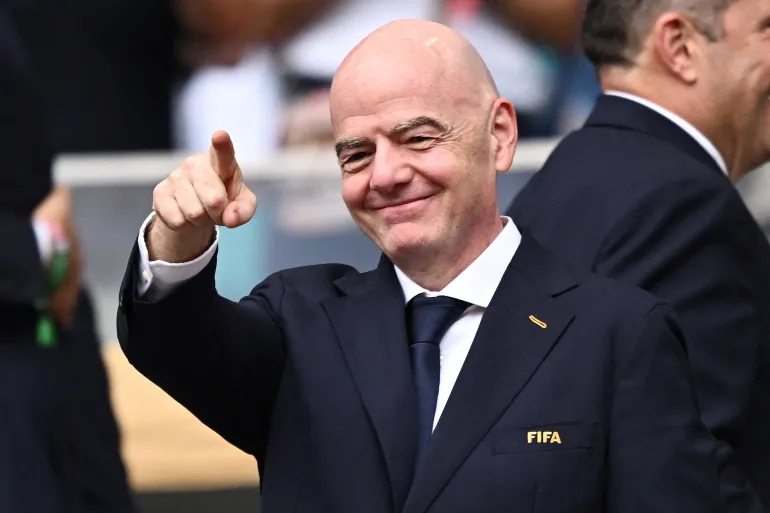
Hicham El Amrani, a key advisor to FIFA President Gianni Infantino and the organization’s director for the Middle East and North Africa, has characterized the recent opposition from European football circles toward the FIFA leadership as a manifestation of fear. According to El Amrani, the primary motivation behind the concerns raised by UEFA, the European governing body, is the rapid progress and rising influence of football programs in other continents, which threatens Europe’s long-standing control over the sport.
The tension between the two bodies has been brewing for some time, particularly following Infantino’s proposals regarding the sale of commercial rights for FIFA tournaments, including the World Cup. UEFA vehemently opposed these plans, at one point threatening to boycott the World Cup entirely. Although Infantino eventually abandoned those specific initiatives in the face of widespread institutional pressure, allegations have persisted that UEFA continues to actively work toward undermining his leadership.
El Amrani, a former Moroccan international player, suggests that Europe’s resistance is rooted in a defensive mindset. He argues that European authorities feel threatened by the strengthening of football infrastructure elsewhere. “The real problem is that Europe feels it is under threat,” El Amrani stated, noting that they are witnessing significant advancements in football development across other regions. He pointed to the growing trend of dual-national players, who were born and trained in Europe, choosing to represent their ancestral nations like Morocco. He believes this shift in allegiance is causing significant anxiety among European officials, whom he accused of acting with a narrow, self-interested focus.
Addressing the most vocal critics of the FIFA President, El Amrani asserted that these individuals are exclusively European and are motivated by the fear of losing their grip on the sport’s global influence. “They are afraid of losing their dominance and want to maintain a monopoly over football,” he remarked, emphasizing that the sport belongs to everyone, not just one region. This latest critique from El Amrani has added a new layer of intensity to the ongoing power struggle between FIFA and UEFA, highlighting deep-seated divisions over the control of global football, commercial interests, and the shifting balance of power across the international football landscape.