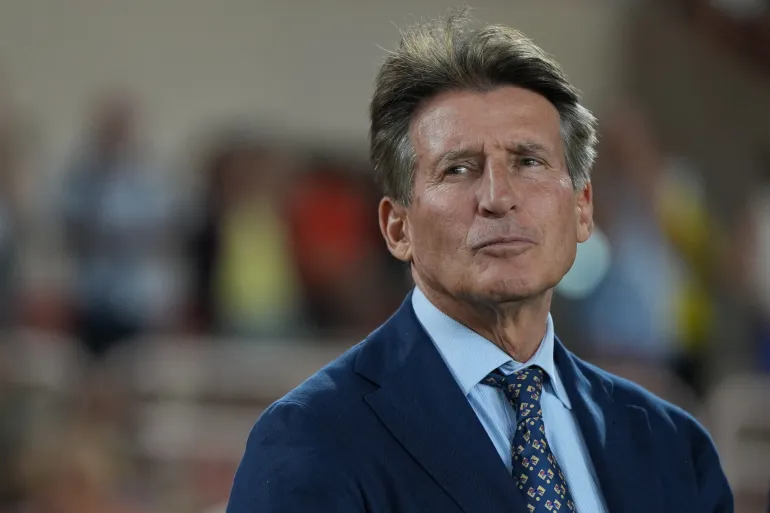
Sebastian Coe has a simple yet firm approach to navigating the complex landscape of political interference in global sport. Speaking late Friday at the European championships, the World Athletics president emphasized the necessity of maintaining institutional autonomy while managing high-stakes international events.
“The balance is keeping the politicians on the bus but not letting them anywhere near the steering wheel,” Coe stated. The 69-year-old, a two-time Olympic gold medallist who led the 2012 London Olympics’ bidding and organising committees, was responding to questions regarding the avoidance of political turmoil at the upcoming 2028 Los Angeles Olympics.
Reflecting on his experience in London, Coe remarked, “I know it’s really important that you have really good working relationships with government, prime ministers.” As a former elected member of the British parliament, he understands that the delivery of major Games is largely predicated on cooperation with state departments, including Treasury, Defence, and the Home Office. “I think I probably achieved that quite well in London,” he added.
However, Coe drew a sharp line regarding political overreach. When faced with phone calls intended to influence sporting decisions, he argued it is “entirely down to the resilience of a sporting organisation to say, ‘I hear what you say, but thank you and goodnight.’” He stressed the vital need to keep politicians out of the driver’s seat, noting that failing to maintain these boundaries is inherently dangerous.
The discussion comes amid a backdrop of controversy, including FIFA’s credibility crisis following a controversial overturned red card at the World Cup. Reports suggest US President Donald Trump contacted FIFA President Gianni Infantino to urge the reversal of a suspension for forward Folarin Balogun, a request FIFA ultimately granted. Coe noted that the idea of political pressure is “not as unfamiliar territory as people tend to think.”
Beyond politics, Coe addressed the growing role of private equity in sports, a topic currently causing friction for FIFA’s leadership. “For the last decade, private equity or sovereign wealth funds have been investing in sports,” Coe observed. He noted that the ambitions of member federations are increasingly tied to their ability to raise revenues, making external partnerships an “absolutely critical conversation to have” as World Athletics faces expiring broadcast and sponsorship deals in 2029.
Coe defended the pursuit of such investments, provided they are managed with transparency. “What you want to absolutely make sure is when that does take place that your sport has the kinds of governances and checks and balance and the type of consultation that allows people to understand the rationale, the ambition and what the execution looks like,” he explained.
The president also addressed the ongoing conflict regarding Russian athletes. Despite the International Olympic Committee lifting its suspension of the Russian Olympic Committee and advising bodies to allow Russian athletes to compete as neutrals, World Athletics has maintained its strict ban imposed after the invasion of Ukraine four years ago. Russian Athletics has since appealed to the Switzerland-based Court of Arbitration for Sport (CAS).
“I will be in the Court of Arbitration for Sport defending our position,” said Coe, who noted that previous legal challenges to their stance have been upheld. “We will continue to do what we think is in the best interest of our sport.” By standing firm against both political pressure and legal challenges, Coe aims to ensure that the governance of athletics remains firmly in the hands of the sporting community rather than external political actors.
Infantino has acknowledged his FIFA proposal lacked transparency, but on Saturday received the backing of the executive director of the White House Task Force for the recently completed World Cup, Andrew Giuliani, who to
World football’s governing body lifted the suspension.
Infantino’s failed plan to sell World Cup profits to private equity investors has landed the FIFA president in a battle to retain his post.
Infantino has acknowledged his FIFA proposal lacked transparency, but on Saturday received the backing of the executive director of the White House Task Force for the recently completed World Cup, Andrew Giuliani, who told critics of Infantino, ‘It’s just politics.’
That debate has been taking place for two or three years, particularly at executive board level.”
“The primacy of an international federation to determine what eligibility looks like in the sport is the base of the pyramid.