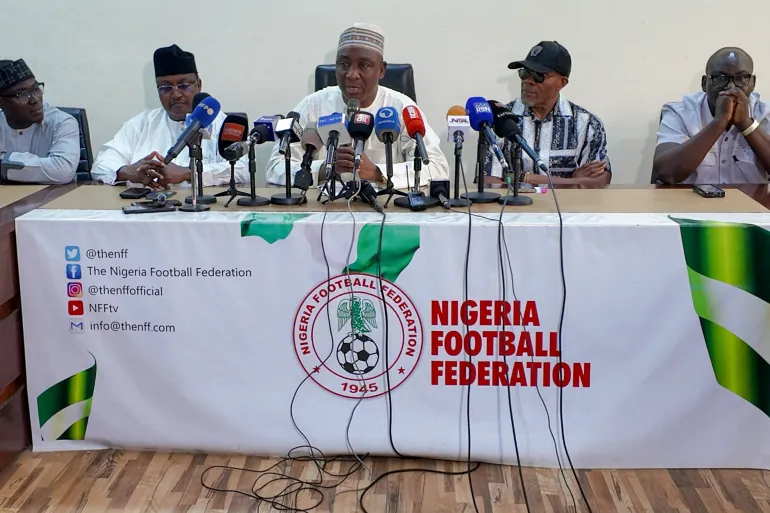
Ibrahim Musa Gusau has officially resigned from his role as president of the Nigeria Football Federation (NFF), citing the need for change amid mounting pressure. His departure, announced in Abuja on Thursday, comes just one month before the federation’s scheduled general elections. Gusau confirmed he had advised other board members to follow suit, and local reports indicate that several have already vacated their positions.
The resignation follows intense scrutiny regarding the federation’s financial management. The Department of State Services, Nigeria’s secret police, is currently investigating the NFF over the alleged misappropriation of 17 billion naira—approximately $12.7 million—provided by the government in 2024 to settle outstanding payments for players and staff. Despite the allegations, Gusau defended his tenure, attributing the organization’s financial struggles to broader economic instability and foreign exchange volatility.
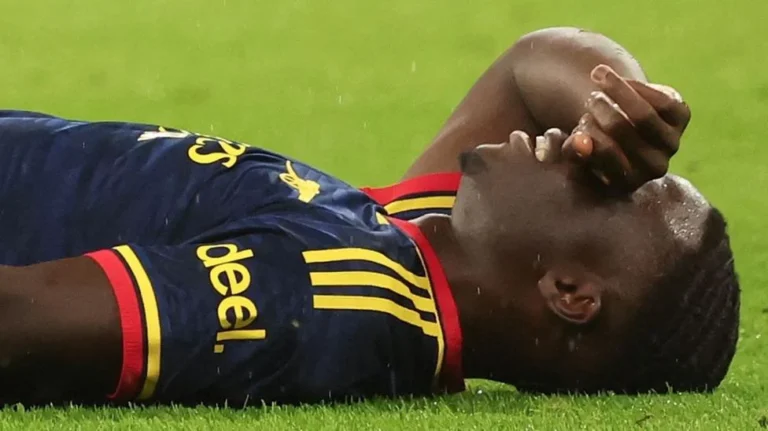
The leadership crisis coincides with a period of significant underperformance for Nigeria’s national teams. The Super Falcons, ten-time winners of the Women’s Africa Cup of Nations, recently failed to qualify for the 2027 Women’s World Cup for the first time since the tournament’s inception in 1991, following a 2-1 playoff loss to South Africa. Similarly, the men’s team, the Super Eagles, has missed the last two consecutive World Cup tournaments.
In response to the leadership vacuum and ongoing mismanagement, President Bola Tinubu has ordered a comprehensive reform of the nation’s football administration. According to a statement from presidential media adviser Bayo Onanuga, the initiative aims to address deep-seated structural deficits. The reform is intended to bolster governance, improve stakeholder representation, and ensure greater accountability across all levels of Nigerian football.
Nigeria’s football governing body has long been plagued by claims of corruption and administrative failures, with players and coaches frequently voicing public grievances over unpaid allowances. Amid these challenges, Gusau highlighted a recent commercial achievement, noting a newly secured partnership with Adidas that is expected to generate $4.5 million in annual cash payments for the federation. The report also notes that the 10-time Women’s Africa Cup of Nations winners crashed out in the quarterfinals of this year’s tournament before losing 2-1 to South Africa in a World Cup playoff. The report also notes that the defeat means that Nigeria will miss the global tournament for the first time since it began in 1991.