
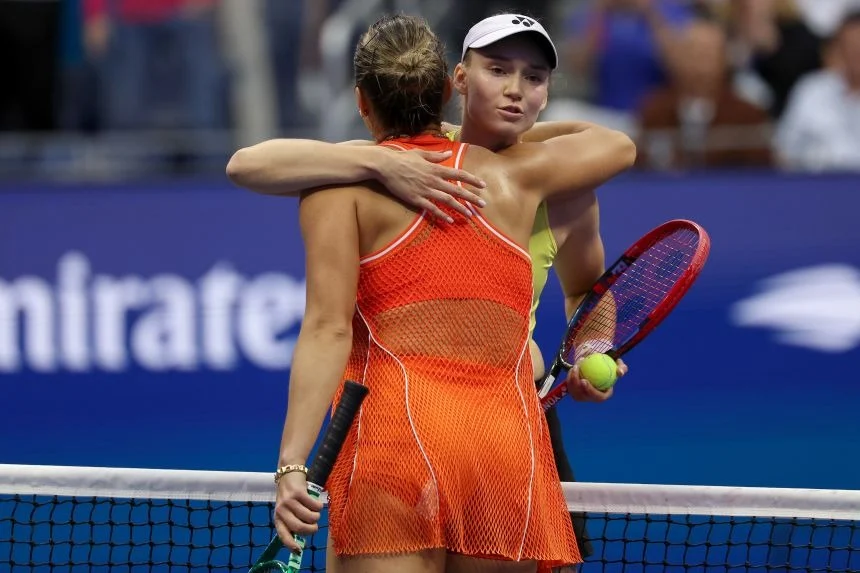
Sports are often viewed through a complex lens of identity, culture, and personal narrative. However, at their fundamental level, they serve as a definitive measure of hierarchy. The US Open final in Queens, New York, provided a stark example of this pursuit, as the world’s two top-ranked players faced off to determine who holds the current title of the best in the sport.
Entering the match, Aryna Sabalenka held the No. 1 global ranking and the status of two-time defending US Open champion. By the end of the contest, however, the hierarchy had shifted. Elena Rybakina, who had already secured the top ranking before the match began due to her tournament performance, further asserted her dominance by defeating Sabalenka 6-4, 5-7, 6-2.
Reflecting on the nature of professional competition, Martin Blackman, former general manager of USTA Player Development, noted that the game is remarkably binary. He explained that rankings serve as a simple indicator of performance: if one player is ranked 18th and another 19th, the former is considered superior until proven otherwise. In this final, the clash between the No. 1 and No. 2 players in the world offered a clear demonstration of that principle.
The match showcased a battle of contrasting styles and immense power. Early in the opening set, Sabalenka appeared unsettled by Rybakina’s ability to match and even exceed her own strength. While Sabalenka stands at 6 feet tall, Rybakina holds a slight height advantage and displayed a faster service game. After Rybakina broke her serve to take a 3-2 lead, a frustrated Sabalenka received a code violation for hitting a ball into the stands. Conversely, Rybakina maintained a composed demeanor, celebrating the first set win with only a subtle gesture.
This loss marked Sabalenka’s first defeat in a US Open final since falling to Coco Gauff in 2023, ending a streak of four consecutive championship appearances. Despite the pressure, Sabalenka’s aggressive style remained intact throughout the match. However, the final point underscored the outcome; Rybakina froze her opponent with a precise serve, leaving the outgoing No. 1 unable to respond. Following the match, a visibly disappointed Sabalenka destroyed her racquet on the bench before ultimately expressing hope for a better result next year.
During the trophy ceremony, Rybakina acknowledged the difficulty of competing against such a formidable rival, noting that their matchups force both players to elevate their game. Her ascent to the top of the rankings effectively began earlier this season with a victory over Sabalenka at the Australian Open. Despite the intensity of their rivalry, Rybakina remained modest about her achievement, admitting that she had not anticipated winning the tournament.
Looking ahead, the rivalry shows no signs of cooling. While discussing her tenure as the world No. 1, Sabalenka noted that she had held the top spot for 99 weeks, a feat she described as an incredible achievement. With her eyes on the future, Sabalenka issued a challenge to her successor, questioning whether Rybakina would be able to match the duration of her reign at the pinnacle of the sport. The report also notes that “This game is very simple and very binary,” Martin Blackman, who spent a decade as the general manager of USTA Player Development, said Sports this week. “If I’m ranked 19 and you’re ranked 18, you’re better than me. The report also notes that at 6-foot, Sabalenka is tall; Rybakina is ever so slightly taller. The report also notes that identity, fitting in and standing out, we say that sports are about everything and anything: community. The report also notes that cultural, artistic and often deeply personal, sports are political. The report also notes that those stories — narrative or allegorical — are in specifics or else in the context. The report also notes that but not without the prism of other factors, they manifest through sports. The report also notes that in truth, though, what sports are actually about — all of them, always, when stripped down to the essence — is figuring out who is better than whom.