
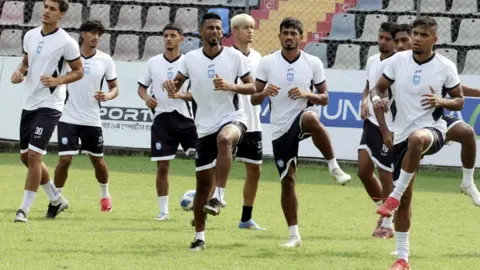
Bangladesh is set to participate in the FIFA-sanctioned ASEAN Cup for the first time as a guest nation. In the upcoming 14-team tournament, the team has been drawn into the premier division group alongside hosts Indonesia, Singapore, and Malaysia. All three opponents hold significantly higher positions in the latest FIFA rankings compared to Bangladesh, which currently sits at 181st. In contrast, Indonesia ranks 118th, Malaysia 136th, and Singapore 148th. Despite being clear underdogs, head coach Tom Saintfiet believes his squad has the potential to deliver a strong performance, provided they play disciplined and clinical football against these superior opponents.
Building on promising displays during the previous Asian Cup qualifiers, where players like Hamza and Sumit held their own against formidable sides, Saintfiet is optimistic. He remains wary of past missed opportunities, specifically referencing the match against Singapore where the team faltered late. “We nearly defeated Singapore last time, even though we eventually lost. If they have an off day and make mistakes, we are capable of beating them,” the coach remarked. Regarding Malaysia, he acknowledged the challenge but refused to rule out a surprise result, noting that the team is focused, well-prepared, and ready to exploit any tactical errors made by their opponents.
The group stage presents a daunting test against the hosts, Indonesia. Saintfiet anticipates that Indonesia will face significant pressure, as they are expected to avoid defeat against a lower-ranked side, similar to how Bangladesh would approach a match against Bhutan. “They will feel the same way we do about teams ranked below us—they won’t want to lose,” he explained. Regardless of the rankings, the coach has set a clear directive for his squad: every match must be played with a winning mentality. He emphasized that the primary goal is to gain experience, stating that while mistakes are inevitable, they must be used as learning opportunities to ensure future consistency.
Injury concerns remain a major hurdle for the coaching staff, particularly in the attacking third. The loss of Bishwanath Ghosh, who was being groomed as a potential center-forward, has complicated tactical planning. Saintfiet expressed frustration over the lack of domestic options, noting, “We don’t have a true number nine. Our local clubs rely heavily on foreign strikers, which makes it difficult to develop talent for that position.” He highlighted that Ghosh had shown promise in attack, notably assisting a goal and creating constant pressure during the San Marino match, though he cautioned that the defender’s aggressive style sometimes risks conceding free-kicks or penalties.
Moving forward, the coaching staff intends to evaluate wingers and attacking midfielders to fill the striker role, with players like Rakib and Mursalin under consideration. Furthermore, the availability of key personnel such as Topu Barman, Jamal Bhuyan, and Foysal Ahmed Fahim remains uncertain as they continue to recover from injuries. Saintfiet remains hopeful that these core players will be fit to participate before the tournament officially commences.