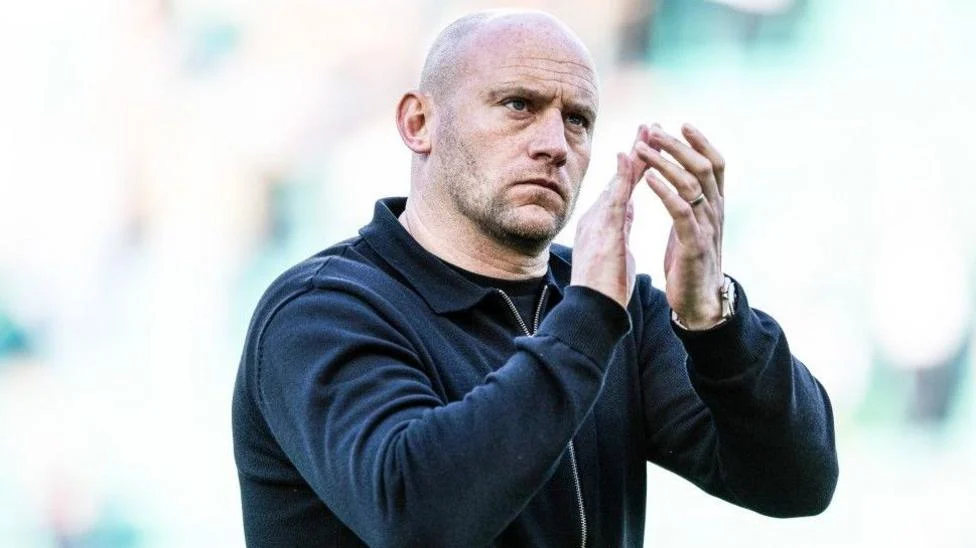
David Gray has been dismissed as head coach of Hibernian just six games into the current league campaign. His departure marks the end of a long association with the Easter Road club, during which he served as a player for twelve years, a coach, and an interim boss before stepping into the permanent first-team manager role for over two seasons.
The exit of a figure so deeply ingrained in the club’s history proved to be a somber affair. Rather than facing hostility, Gray left to a backdrop of collective relief from the supporters. His stature as an “immortal” hero who delivered the Scottish Cup in 2016 ensured that fans were reluctant to turn on him, making his final days in the role a painful experience for all parties involved. Unlike previous departures like those of Nick Montgomery, Lee Johnson, or Shaun Maloney, Gray was viewed as a genuinely passionate and honest individual, though his recent candid assessments of the team’s struggles did little to stem the tide.
His tenure contained significant achievements that stood out against the club’s recent history. Gray holds the distinction of being the first Hibernian manager since the legendary Eddie Turnbull in the early 1970s to secure European football for two consecutive seasons. Additionally, he maintained an impressive record against top-tier opposition, achieving three consecutive away victories at Ibrox and securing a win at Celtic Park last season.
However, these successes were overshadowed by a severe decline in domestic form. The club matched an unwanted record dating back to 1920 by suffering six consecutive league defeats at home. His inability to convert two opportunities in the European Conference League play-offs further hampered the club’s financial prospects. Ultimately, a return of only six points from the opening six league matches, compounded by a disappointing defeat to Kilmarnock, rendered his position untenable, even with a League Cup semi-final against Hearts on the horizon. The report also notes that more ‘thanks for the memories’ than ‘never darken our door again’, it was the strangest kind of farewell; more sadness than satisfaction.