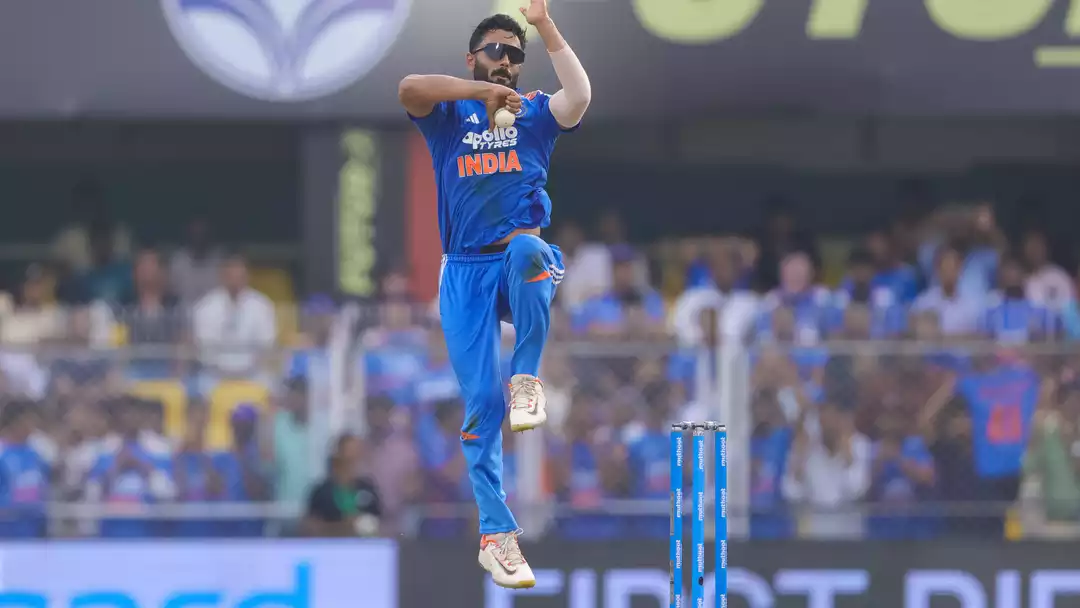
While Mayank Yadav and Prince Yadav made notable impressions with the ball during the T20I leg of the West Indies tour of India, Naman Dhir emerged as the most intriguing multi-format find. In Bengaluru, a rapid six-ball performance offered a glimpse into his batting potential, though it was his evolving off-spin that had previously made the strongest mark on the tour as India sought to test their bench strength.
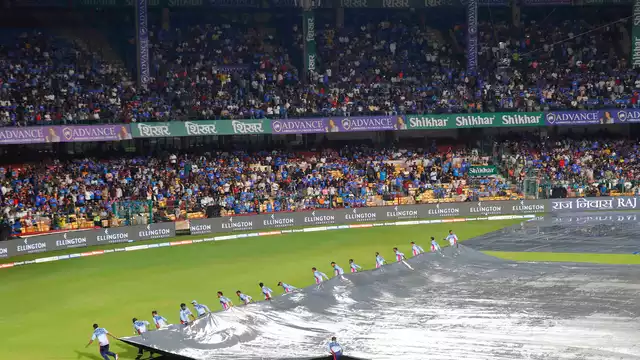
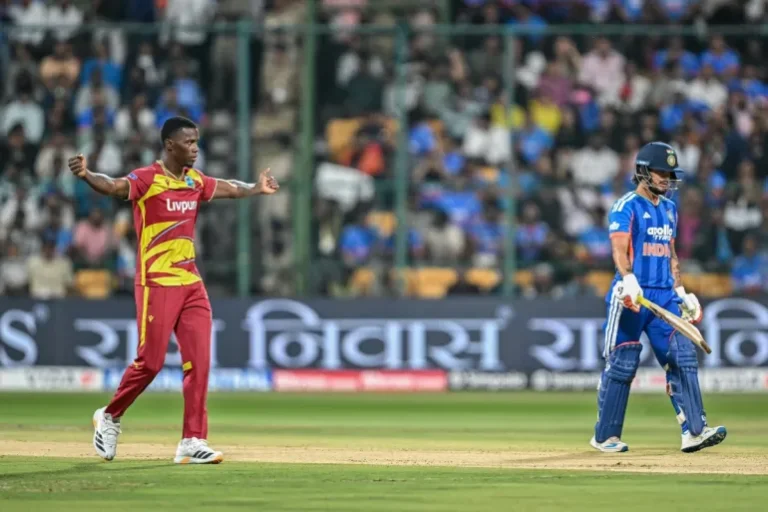
Rain kept the Bengaluru pitch covered prior to India’s 46-ball innings, creating conditions where West Indies seamers found success dragging their length back, whereas fuller deliveries were punished. Keemo Paul saw Abhishek Sharma loft his first full ball over mid-wicket before removing him with a back-of-a-length adjustment. Shamar Joseph had Ishan Kishan caught at mid-on off a slower ball into the deck, Shamar Springer bowled Sanju Samson with a seaming delivery, and Shreyas Iyer top-edged a pull shot.
With India positioned at 88/4 in the nine-overs-a-side match and 17 balls remaining, Dhir was promoted ahead of Shivam Dube. Demonstrating immediate rhythm despite limited batting opportunities on the tour, he launched a misdirected off-pace delivery from Paul over deep mid-wicket. When Paul tried bowling wide of off stump, Dhir utilized his height and high grip to muscle the ball over long-off, scoring 10 runs off two balls. Paul then bowled a 140 kph wide, which Dhir followed by shifting across the crease to clear long-off off a 137 kph delivery. Springer later delivered a full ball outside off with mid-off inside the circle, which Dhir dispatched for his third six, finishing undefeated on 24 off six balls. Teammate Tilak Varma noted that such late-order cameos significantly enhance India’s balance.
His hitting prowess complemented his earlier bowling performances across the tour. During the preceding ODI series—where spinners surrendered 6.55 runs per over—Dhir bowled 16.3 overs with an economy rate of 6.30, ranking third overall behind Kuldeep Yadav (5.56) and Matthew Forde (5.90). On unhelpful surfaces, his resilience after being hit was particularly notable. Despite conceding 12 sixes in the T20I series—the second-highest count—he responded by taking a wicket on the very next ball on five separate occasions, earning praise from West Indies coach Daren Sammy for his mental composure.
Sammy observed that both Dhir and Roston Chase excelled on batting-friendly tracks by limiting boundary balls and maintaining high dot-ball ratios. “Not bowling too many boundary balls. I think that’s the key here on good wickets. Not going for too many runs by the boundary routes. And they bowled much more dots,” he said. Dhir registered a 35% dot-ball rate, second only to Mayank Yadav’s 43.3%, while Chase recorded a series-best 9.06 economy rate and a 19.1% boundary frequency compared to the tournament average of 27.7%.
Drafted late into the squad for Washington Sundar, Dhir displayed greater pace variation than Sundar, whose deliveries usually range between mid-90s and 100-plus kph. Operating between the early 80s and late 90s kph, Dhir proved effective on debut in Lucknow. Entering the attack in the ninth over after Shai Hope and Sherfane Rutherford stabilized the innings, Dhir gave away just six runs in an over flanked by 15 and 18-run overs from Kuldeep Yadav and Axar Patel.
After Hope struck a 94 kph delivery over deep mid-wicket, Dhir widened his angle and reduced his speed by five kph to turn the ball into the right-hander, resulting in a catch in the same area. Against Romario Shepherd, who had just hit him over square leg, Dhir slowed the pace to 85 kph, creating 2.93 degrees of away-drift to draw a miscue to long-off. He rounded off his performance by switching to over the wicket against Springer to deny him elevation. In Indore, after Kamil Pooran struck three sixes off him, Dhir pulled his length back to cramp the batter, who misqueued his fourth attempt to deep square leg. Overall, four of his five wickets in the series came within the 80–90 kph range, contrasting with Axar Patel, who went faster when hit and did not switch angles.
Four of Dhir’s five wickets were right-handed batters. Tilak Varma highlighted Dhir’s willingness to bowl under pressure against heavy-hitting right-handers as a primary positive for India. This bowling development followed dedicated preparation; before joining the ODI setup, Dhir bowled hundreds of overs with the Mumbai Indians squad at Reliance Corporate Park in Navi Mumbai. Indian captain Shreyas Iyer praised his proactive approach after Lucknow: “Special player, I must say. Like showing that attitude and approach, wanting to bowl in those crucial moments, he realized that the ball was turning, and then he capitalized on it.”
Beyond his bowling, Dhir’s primary impact remains his power hitting against pace across different length bands. With Shivam Dube and Axar Patel facing recent challenges finishing against pace and Hardik Pandya’s late-overs output tapering, Dhir offers a dynamic lower-middle-order alternative. Dhir outlined his long-term focus during the Hyderabad T20I: “No, I definitely want to be a genuine all-rounder, but at the time I prefer that I should score more with the bat,” reinforcing his intent to establish himself as a complete two-way option for India.