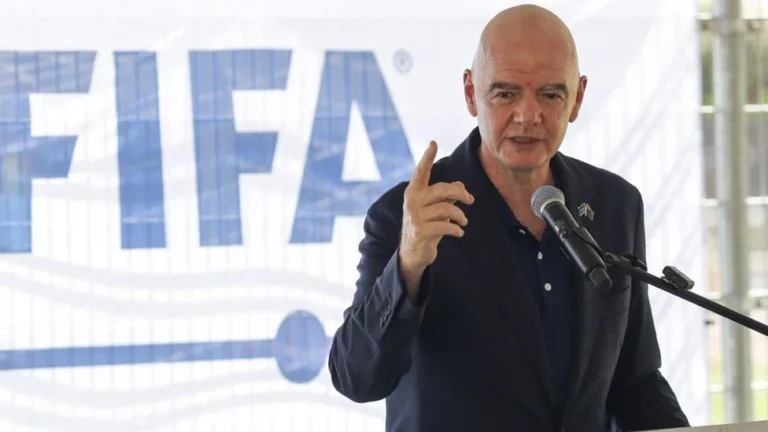
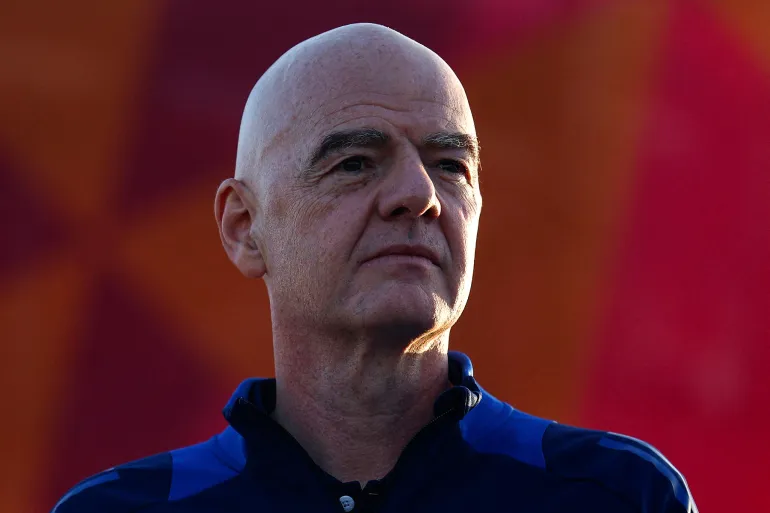
The race for the leadership of global football has intensified as four candidates formally enter the contest to lead FIFA. Incumbent Gianni Infantino, the 56-year-old Swiss administrator, is seeking a fourth term in office that would extend his leadership through 2031. He has held the presidency since February 2016, following the resignation of his predecessor, Sepp Blatter. With candidates rushing to submit their nominations ahead of the deadline on Wednesday, the race for next year’s FIFA presidential election has entered a decisive phase this week. Breaks down everything you need to know about the FIFA presidency and its upcoming elections. Succeeding his compatriot Sepp Blatter, who resigned in June 2015, infantino has been in power since February 2016. And how does it work, when is the FIFA presidential election. The first to publicly declare his intention to challenge fellow Swiss citizen Infantino, the list of candidates wraps up with ex-Tottenham Hotspur centre-back Vega. When he was elected at an Extraordinary Congress in 2016 following Blatter’s resignation, should not count towards that limit because it completed an inte, but Infantino successfully argued that his first spell in charge. According to in December 2022, the FIFA Council “unanimously confirmed” that the period between 2016 and 2019 does not count as a term of office for Infantino, but FairSquare, The reasoning was never made public. Arguing he has already served the maximum three permitted under the body’s statutes, fairSquare had previously urged FIFA to rule that Infantino was ineligible to seek another term.
Standing in opposition to the incumbent are three challengers: French Football Federation leader Philippe Diallo, Japanese football official Kozo Tashima, and former Swiss international player Ramon Vega. Each candidate must secure the support of at least five national football associations to be eligible for the election. The son of a Senegalese boxing champion, has been president of the French Football Federation since January 2023, the 63-year-old. With Tashima, the Japan Football Association’s (JFA) honorary president, challenging Infantino, japan has fielded a candidate for the first time in history. Who has served on the FIFA Council since 2015 and became JFA president the following year, believes he has a 20- to 30-percent chance of winning the coveted seat in global football, former Japan international Tashima. A French former Arsenal manager and FIFA’s current chief of global football development, had been seen as a potential candidate to get Europe’s backing, arsene Wenger. UEFA had been struggling to find a credible candidate to stand against Infantino, naming Diallo only two days before the official nomination deadline.
Election Logistics and Configuration
- Election Date: March 18, 2027
- Event: 77th FIFA Congress
- Location: Rabat, Morocco
- Member Nations: 211
- Winning Threshold: Simple majority of 106 votes (if two candidates run)
Confederation Voting Structure
- UEFA (Europe): 55
- CAF (Africa): 54
- AFC (Asia): 46
- CONCACAF (North America): 35
- OFC (Oceania): 11
- CONMEBOL (South America): 10
The election process is dictated by the outcomes of the preceding men’s World Cup. With Spain securing the title in the 2026 North American tournament, the subsequent congress will serve as the forum for the membership vote. While each of the 211 member nations carries a single, equal vote, the selection process can become complex if more than two candidates remain; in such instances, a two-thirds majority is required in the initial round, followed by subsequent rounds of voting until a winner is determined. A simple majority of more than 50 percent is needed to win – which translates to the support of 106 member nations, if two candidates are contesting the election. Last month, the head of Asian football endorsed his bid in a dramatic change of heart, while support across confederations gives him a commanding position among FIFA’s 211 voting members.
Infantino’s campaign has faced scrutiny regarding his eligibility for a fourth term.
Critics, including Miguel Maduro—the former head of FIFA’s governance committee—have pointed to Article 33, paragraph two of the FIFA statutes, which stipulates that no individual may serve as president for more than three terms. However, Infantino successfully argued that his initial period in office, starting in 2016 after Blatter’s departure, should not be counted toward this limit as it constituted an interrupted mandate. FIFA’s ethics committee had banned Blatter from the sport for eight years for a conflict of interest and disloyalty to the organisation over a $2m payment deal.
In December 2022, the FIFA Council unanimously confirmed this interpretation, though the specific reasoning behind this decision remains private.
The incumbent has also navigated internal friction over his recent business proposals.
Earlier this year, he encountered significant pushback from various confederations, including UEFA and CONCACAF, after attempting to integrate private investors into a new commercial entity. The breakdown of the six confederations’ votes is as follows.
These groups argued that the sport belongs to no individual.
Although the Asian Football Confederation initially voiced opposition, it later reversed its stance, providing a boost to the incumbent’s reelection prospects.
Infantino maintains that he holds the support of the vast majority of member associations, despite the public debate surrounding his administrative record and the failed investment project for which he has since issued an apology.
Historically, the organization has never been led by a woman. The highest administrative rank achieved by a woman in FIFA’s 122-year tenure remains the secretary-general post held by Senegalese diplomat Fatma Samoura in 2016. As the vote approaches, the focus remains on whether challengers like Diallo, who claims unanimous backing from European associations, or Tashima, the first Japanese candidate to run, can gather sufficient momentum to overcome Infantino’s established influence across the global confederations. “I think what is important is that in an organisation like FIFA, there can be different views, different points of view,” Infantino told the BBC.