
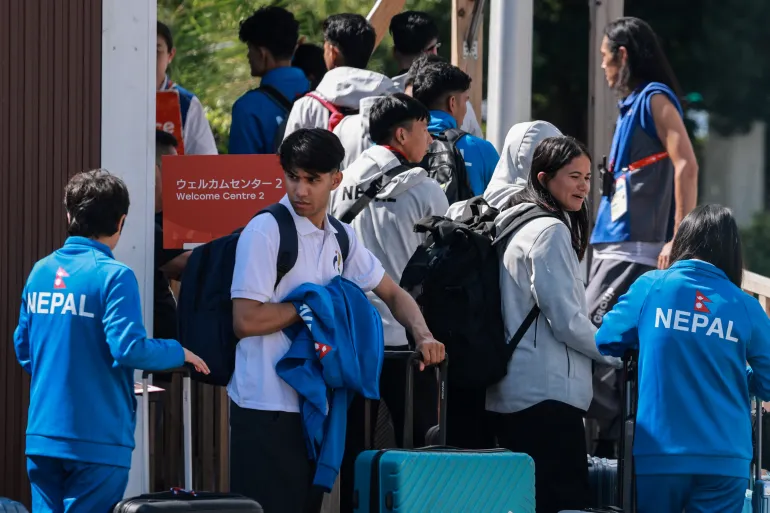
The Aichi-Nagoya Asian Games are set to open this weekend under the shadow of a mounting accommodation crisis that has left officials scrambling to address complaints from international delegations. In a bid to reduce costs, organizers opted against constructing a dedicated athletes’ village for the 17,000 participants and staff, instead relying on a mix of a cruise ship, converted shipping container huts, and various hotels. This strategy has drawn immediate backlash as the Games commence.
South Korean officials have been particularly vocal, describing the container-style living quarters as the “worst-ever.” The head of the South Korean basketball program criticized the units, noting that the beds are too short for athletes to stretch out properly. Further complicating the situation, basketball player Byeon Jun-hyeong shared footage on social media depicting a leaking sink and water-soaked floors inside his unit. Meanwhile, Philippine Olympic Committee president Abraham Tolentino reported that while his athletes were housed, some team officials were forced into alternative arrangements like Airbnb properties.
The housing committee explained that the logistical strain stems from an unexpected increase in participant numbers following the addition of new sports. The competition schedule now includes events such as mixed martial arts, padel, surfing, virtual taekwondo, and teqball. According to chief organizer Hideaki Omura, who also serves as the governor of Aichi prefecture, efforts are ongoing to improve conditions. He stated that organizers are responding to individual concerns as they arise and claimed that a committee of former athletes previously vetted the container plans and deemed them functional.
Housing solutions are fragmented across the region. The cruise ship Costa Serena arrived in Nagoya on Tuesday to host 4,000 individuals, while another 2,000 are staying in container huts at the port. Logistical blunders have emerged during the check-in process, according to Japan’s deputy Chef de Mission, Hisashi Mizutori. He noted that room assignments, based strictly on headcount, have led to instances where men and women, or coaches and athletes, were grouped inappropriately. Some trainers have also faced issues storing medical equipment due to space constraints. In response, the Japanese Olympic Committee has prepared city-based hotels as backup options.
Cricketers appear to be an exception to these housing struggles. Naoki Alex Miyaji, head of the Japanese cricket association, confirmed that teams in his sport have been offered hotel accommodation. He explained that this was the result of long-term planning and collaboration between the Asian Games organizing committee and the Asian Cricket Council, whereas many other sports have been assigned to more limited cruise or container facilities.
The event is already facing broader disruptions as several sports—including football, basketball, hockey, and modern pentathlon—are underway. Weather has added a layer of difficulty; Tropical Storm Dujuan was tracked off the Pacific coast on Thursday, heading toward central Japan. Recent torrential rains in Nagoya forced school closures, halted train services, and displaced hundreds of athletes from their quarters. Kosei Inoue, Japan’s chef de mission, confirmed that some matches have already faced delays and that the committee is holding urgent meetings to prepare for potential typhoon impact around September 21. The report also notes that after the host nation decided not to build a dedicated Games village for the 17,000 competitors and officials, the tournament has been mired in complaints over housing options for athletes travelling to Japan. The report also notes that organisers are relying on a cruise ship, temporary wooden cabins and hotels, but this temporary accommodation has met with criticism in the days leading up to the continental competition, to cut costs this year. The report also notes that the official housing committee said the issue arose because they expected 15,000 athletes and officials, but numbers increased as new sports were added. The report also notes that chief organiser Hideaki Omura said efforts are being made to ensure athletes are comfortable, ahead of the Games’ opening. The report also notes that “If there are different opinions, then we will respond to them appropriately,” Omura, who also serves as governor of Aichi prefecture, told the AFP news agency. The report also notes that “We are currently working to coordinate and negotiate adjustments wherever possible. The report also notes that we are considering using the backup accommodations that Team Japan prepared in advance as alternatives.”, for cases where that proves too difficult.