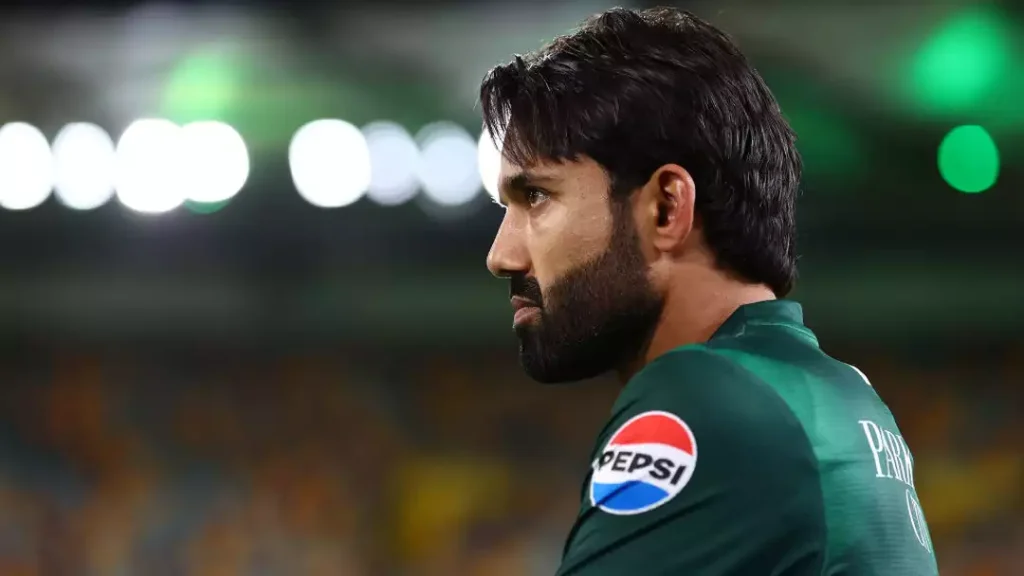
Pakistan cricketer Mohammad Rizwan has initiated legal action in the Lahore High Court, seeking clarity following an opaque investigation that involved the confiscation of his personal mobile phone. The situation began in the early hours of August 30, following the conclusion of the Lord’s Test match against England. At approximately 1:00 AM, Rizwan was summoned from his hotel room in London to the lobby, where a Pakistan Cricket Board (PCB) anti-corruption official, Colonel Akhtar, introduced him to an operative from Pakistan’s Federal Investigation Agency (FIA). Mohammad Rizwan may be experiencing Kafkaesque predicament. He, seemingly, and even admittedly, is unaware what his fault is, who has leveled the charges against him and why he is being dragged into a situation of uncertain future, like the protagonist in Franz Kafka’s Trial. His phone has been confiscated and the exact reason has not been explained. Akhtar) asked him to come downstairs with a specific instruction to bring his handset along. Accessed by. “Immediately after the Lords Test Match held between England and Pakistan on 27.08.2026 to 30.08.2026, the Petitioner was summoned to the lobby of the hotel where the entire team was staying at 01:00 AM in the night, he recounted the incident in his appeal before the court.
Despite his initial hesitation, Rizwan was subjected to questioning regarding online betting and gambling. He reports that his mobile device was seized immediately, despite his repeated refusal to surrender it without a clear explanation of the charges or the legal authority behind the action. Rizwan states that he handed over the device only after receiving assurances that it would be thoroughly examined and returned within three hours. However, the phone remains in the custody of the National Cyber Crime Investigation Agency (NCCIA) weeks later. Online gambling before the handset was seized, in spite of his steadfast resistance, rizwan was confronted with a barrage of questions relating to betting.
In his court petition, the former international captain alleges that he has faced intimidation, harassment, and blackmail. He stresses that no formal notice, arrest warrant, or written documentation was ever provided to explain the basis for the seizure or the nature of any potential allegations against him. Rizwan asserts that he was neither informed of the specific incident under investigation nor the legal provisions that would justify such an intrusion into his personal property. According to him, “No written notice, no written demand, no allegation, no charge, no warrant, no receipt and no document explaining the basis on which the phone was being taken away.”.
The controversy is exacerbated by the involvement of the Ministry of Interior, which oversees the FIA and is currently led by Mohsin Naqvi—who also serves as the chairman of the PCB. Following the seizure, Rizwan and teammate Imam-ul-Haq were instructed to depart for Pakistan on the next available flight. Upon his return, Rizwan was summoned again to the NCCIA, where he was questioned about his financial assets and bank accounts, yet the status of his mobile phone remains unresolved.
Legal experts observe parallels between this incident and the 2010 spot-fixing scandal, which also occurred during a Lord’s Test between England and Pakistan. However, observers note that there has been no sting operation reported in this instance. Legal counsel for the player suggests it is premature to determine if this case mirrors previous scandals, noting that the truth will only emerge once the inquiry is concluded. Meanwhile, authorities maintain that the investigation follows standard PCB and government procedures.
The Lahore High Court has declined to grant immediate relief, stating that it is appropriate to allow the competent agency to continue its inquiry at this stage. Throughout this period, Rizwan has been excluded from participating in the President’s Trophy Grade 1 First-Class tournament, a competition involving most of the players who recently returned from the UK tour. Rizwan maintains that he is not filing a formal complaint against any specific individual or the PCB, but is instead attempting to clear his name and resolve the uncertainty surrounding his status.
Regarding the role of the International Cricket Council (ICC), legal experts point to Article 1.11 of the ICC Anti-Corruption Code, which mandates that players cooperate with the laws of their respective countries. The PCB has provided limited commentary, stating only that an internal investigation is currently underway in accordance with its regulatory framework, ensuring that all concerned individuals receive due consideration. Rizwan remains firm in his position, emphasizing that he was never presented with any evidence of corruption or specific allegations throughout the ordeal.
Having represented his nation in 256 international matches, including 47 Tests, 103 ODIs, and 106 T20Is, Rizwan has expressed deep frustration over the lack of transparency. His petition highlights a sequence of events where he was kept in the dark about the nature of the suspicion against him. He remains committed to seeking a formal explanation for why his property was retained indefinitely and why he was forced to undergo such an unconventional interrogation process.