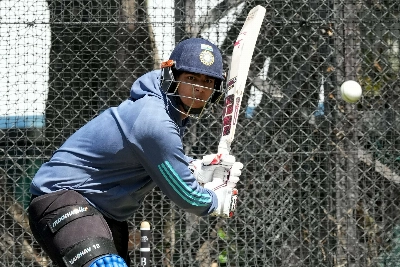
New Zealand faces a critical challenge in the third T20I at Wellington’s Hnry Stadium on Tuesday, trailing 2-0 in the series against a formidable Indian side. Also known as the ‘Cake Tin’, is usually windier, but Wellington will present a different challenge – as the multi-sport Hnry Stadium.
The hosts will be without two primary fast bowlers, Matt Henry and Lockie Ferguson, for this must-win encounter.
Henry, who managed only two overs—including a maiden—in Saturday’s second match at Hagley Oval, is being rested for the remainder of the series to manage his workload for other formats.
Ferguson, who also exited the previous match as a precaution, is similarly unavailable. Their absence forces the Black Caps to rely on Adam Milne, Blair Tickner, and Kyle Jamieson, the latter of whom will feature in Wellington before pivoting to Ford Trophy duty ahead of the upcoming Test series. While Ferguson also went off as a precautionary measure, neither bowler completed his allotted overs in the previous match – Henry had a calf complaint.
India enters the match with significant momentum after successfully chasing down totals of 226 and 181, despite having minimal practice time before the series opener. Their batting depth and execution have been central to their success, complemented by New Zealand’s own lapses in fielding and bowling. However, India’s bowling coach Morne Morkel remains focused on supporting veteran seamer Bhuvneshwar Kumar, who has struggled for rhythm with figures of 1-99 across eight overs this series. Morkel acknowledged the pressure on the 36-year-old, who returned to the international stage following a strong IPL tenure and a lengthy absence since the 2022 T20 World Cup semi-final. India, by contrast, have barely put a foot wrong so far, despite having just one training session before the series opener in Christchurch. Sharper execution of their batting prowess has helped them chase down a record 226 and a tricky 181. According to CricViz, India heading into the third T20I with both the momentum and the numbers firmly in their favour. Morkel revealed that he suggested Bhuvneshwar not to ‘chase’ anything and leave the expectations factor out. He’s done exceptionally well in the IPL.
“I’ve got a lot of sympathy for his return,” Morkel remarked during a pre-match press conference. “There is naturally expectation after four years away, compounded by limited preparation time due to the schedule. My advice is to block out the external noise, stop chasing results, and simply be himself.”
Conditions in Wellington are expected to differ from previous venues, as the Hnry Stadium is known for its windy environment and shorter square boundaries—approximately 60 metres—requiring tactical adjustments from the Indian bowling attack. Data from CricViz underscores India’s dominance, noting they have won 21 of 33 T20Is against New Zealand, including nine of 14 played on New Zealand soil. Left-hander Tilak Varma has proven particularly dangerous, maintaining a 51.6 average while chasing and contributing significantly to an overall record of 1,282 runs at an average of 41.4 since early 2025. Its square boundaries are only around 60 metres long, which means India’s bowlers will have to adjust their plans accordingly, apart from a drop-in pitch. While losing only 11 games and one match tied, india have won 21 of their 33 T20Is against New Zealand. Compared with 39.7 when batting first, he averages 51.6 in T20Is while chasing. And all 26 of his not-out innings in T20 cricket have ended in victories, india have won all 12 T20Is in which he has remained unbeaten. Since the start of 2025, Varma has scored 1,282 T20I runs in 52 matches at an average of 41.4 and a strike rate of 141.7.
New Zealand’s primary hope lies in the form of captain Mitchell Santner, whose four-wicket haul in the second T20I highlighted his threat against a batting lineup that has shown increased vulnerability to finger spin in 2026. While India maintained a strong record against such bowling in 2025, their efficiency has dipped this year, losing a wicket every 18 balls compared to every 39 balls previously. Given that Ishan Kishan continues to recover from a right adductor strain, Vaibhav Sooryavanshi is expected to retain his position at number three, with the team likely sticking to their established playing eleven. Who claimed four wickets in the last game, new Zealand’s biggest weapon could be skipper Mitchell Santner. Losing a wicket every 39 balls, but that figure has fallen to 27.3 in 2026, with a wicket falling every 18 balls, india have averaged 58.2 against finger spinners in 2025. “Two, leading into his selection, I mean, there was a month of cricket where, yes, he trained, but this is a different beast coming and playing international cricket where the margins are small.