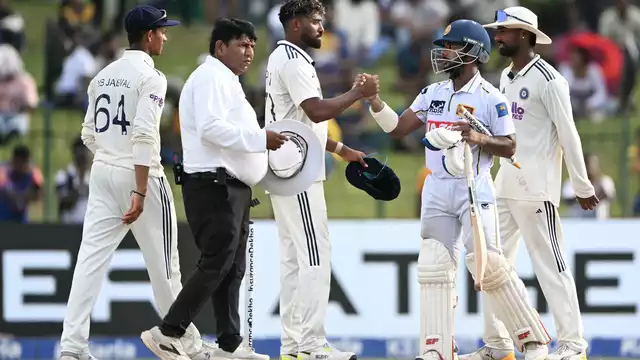
India’s performance in the Colombo Test was defined by a taxing 243.4 overs in the field, a period that captain Shubman Gill described as a cyclical struggle where one setback compounded the next. While Sairaj Bahutule had previously identified Sonal Dinusha as a significant obstacle, the pitch conditions at the Sinhalese Sports Club (SSC) proved equally challenging for the touring side. Despite India entering the match with three spinners, the expected advantage did not materialize; although the degree of turn increased as the game progressed, the ball moved too slowly and with insufficient bounce to create consistent pressure.
Gill explained that the nature of the surface effectively neutralized two primary modes of dismissal—LBW and bowled—throughout the final three days of the match. With the ball turning slowly, the only realistic path to a wicket was through catches at short leg, silly point, or slip. As the pitch slowed further, the difficulty for bowlers increased, making it easier for batters to defend. Gill noted that when bowlers lose the threat of LBW and bowled, the tactical landscape shifts significantly in favor of the batting side.
The decision to enforce the follow-on after Sri Lanka folded 14 runs short of the target on Day 4 has faced scrutiny, but Gill stood by his choice. With India having spent 89.4 overs in the field, they opted to push for a result rather than bat again. Gill pointed out that 68.2 overs were lost to rain, and the team had to weigh the possibility of play being washed out entirely on the final two days. He argued that the decision was the best available at the time, aiming to either set a target of 400 or force a quick chase, and he rejected the notion that the strategy backfired.
India’s defensive plans were forced to evolve as Sonal Dinusha and Keshara Nuwantha built a resilient partnership. After Sri Lanka resumed the final day at 16/6, the pair added 100 runs in the morning session, compelling Gill to move his fielders outward to prevent easy runs, which inadvertently eased the pressure on the batters. Even after Nuwantha was dismissed shortly after lunch, India struggled to break through the tail. Prabath Jayasuriya held firm for 28 balls, while Lahiru Kumara batted for 90 deliveries to score 12 runs, leaving the Indian spinners unable to find an edge.
Sonal Dinusha’s performance was particularly notable, as he accumulated 173 runs via sweep shots across the two-Test series without being dismissed, a record for any batter since 2007. Gill admitted that India attempted to use short-pitched bowling to challenge Dinusha, but the lack of pace in the wicket rendered the tactic ineffective against the batter’s solid defense. Despite the frustration of failing to win after a strong first-innings total, Gill credited Sri Lanka for their tenacity, noting that the hosts were playing in familiar conditions that are often underestimated.
Reflecting on the broader context, Gill emphasized that India had been the dominant side for the majority of the last eight or nine days of cricket. While the draw complicates India’s path to the World Test Championship final—leaving them with a current points percentage of 51.52%—the captain remains optimistic. He believes that if India performs well in the upcoming two-Test series against New Zealand, they remain in a strong position to qualify for the final, provided they secure the necessary results. The report also notes that the data should tell you the spinners should’ve been delighted at the SSC: the average degree of turn just kept getting bigger as the Test progressed and balls turned sharp consistently. The report also notes that we felt that on Day 3, 4 and 5, the mode of dismissals – LBW and bowled – were completely out of the game, because the ball that was turning, was turning very slow and with bounce,” Gill said after the drawn fixture. The report also notes that india looked at the potential overheads and went for the jugular. The report also notes that i think we fielded for about 250 overs [243.4]. The report also notes that they bowled around 130 overs [138]. The report also notes that so the 70 overs [68.2] that were lost in the middle were because of the rain, there are 450 overs in a match.