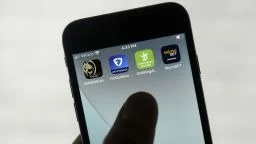
On Easter Sunday in 2022, Shane was expected at his father’s home in Westchester, New York, for a family meal at 1 p.m. Instead, he spent the day alone at Citi Field in 45-degree weather, compulsively tracking a game on which he had wagered $25,000. Shane, 33, described his state of mind as a compulsion he could not escape, noting that when significant money was on the line, he felt an urgent need to be physically present at the event. He admitted that he never intended to become a gambler, but the ease of access provided by the legalization of mobile sports betting in New York in 2022 turned his fandom into a destructive habit.
Before the legal shift, Shane had never placed a bet and would not have known how to locate a bookmaker. The sudden influx of aggressive advertising and promotional offers made betting feel like a way to deepen his connection to the New York Mets. However, the reality was far more isolating. He began to hide his preoccupation from friends and family, eventually becoming a closet gambler. The sportsbook even assigned him a personal customer service agent who texted him like a friend, offering perks like tickets to New York Rangers playoff games to keep him engaged. By late spring 2023, Shane realized he had a serious problem and sought treatment, beginning a difficult journey toward sobriety that included addressing alcohol addiction as well.
The recovery process has been fraught with challenges. Shane’s father was initially angry, and the strain of the addiction has permanently altered their relationship. Even after a year of sobriety, Shane relapsed in May 2024 while visiting a friend in New Jersey, where his New York self-exclusion order did not apply. He spent the remainder of that year traveling to New Jersey to place bets, a cycle he described as sick behavior that forced him to repeatedly involve his family in his recovery. Currently, he has been sober for nearly four months, with his father managing his finances to prevent further lapses.
The experience of another individual, 33-year-old Ely, mirrors this pattern of deception and financial ruin. Having gone broke betting through offshore sites before legalization, Ely believed he could eventually turn a profit if he simply stuck to his own set of rules. As an introvert, he noted that in a pre-digital era, he likely would have avoided the social friction of betting, but the anonymity of mobile apps allowed his addiction to flourish. After inheriting a significant sum of money in 2023, he depleted nearly all of it on sports wagers. By March 2025, he was forced to confess his situation to his father, though he initially lied to his face to cover the extent of his losses.
The impact of these addictions extends beyond the individual to the broader culture of sports. Since the Supreme Court paved the way for legalized betting in 2018, the industry has expanded into 39 states and Washington, DC. This growth is deeply intertwined with sports programming, making it difficult for fans to consume content without encountering betting-related messaging. A July 2025 poll from the Pew Research Center indicated that 43% of Americans now believe legalized sports betting is bad for the country, a sentiment often shared by those who have personally struggled with the behavior.
Industry leaders, including FanDuel and DraftKings, claim to be developing technology to identify and mitigate risky betting patterns. However, advocates note that for many, the damage to personal relationships is already done. Men like Shane and Ely report that their addiction caused them to withdraw from social circles, lie to loved ones, and lose the joy they once found in sports. For them, the path to recovery involves not just stopping the bets, but rebuilding the trust and personal identity that were sacrificed to the sportsbook apps. The report also notes that the family would sit down to eat at 1 p.m. The report also notes that the exact same time as first pitch in a low-stakes, early-season game between the New York Mets and the Arizona Diamondbacks. The report also notes that six months prior, Shane had never gambled a penny. The report also notes that “I wouldn’t have known how to find a bookie, even if I knew what a bookie was,” he said. The report also notes that then, in 2022, New York legalized online and mobile sports betting and suddenly, rabid fans like Shane were subject to rampant advertising and alluring promotions. The report also notes that and he was watching most, if not every, game in some capacity, the Mets were already a major part of his life. The report also notes that only them and only to win – seemed like an opportunity to amplify the experience, betting on his favorite team – at first.