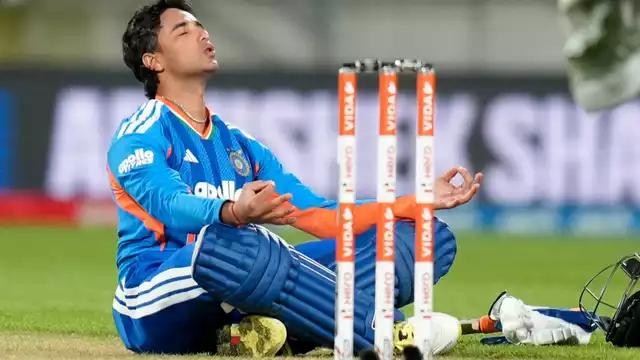
Abhishek Sharma continues to redefine T20 batting standards, producing a masterclass in Wellington that secured India a decisive series victory against New Zealand. Chasing a formidable target of 198, India reached their goal with 40 balls to spare, finishing at 199/4 in just 13.2 overs. The win ensures the tourists hold an unassailable lead in the series with two matches left to play. Abhishek Sharma has made a habit of mocking T20 numbers. They got there with 40 to spare. And both kept carving it away, new Zealand kept offering width to the two left-handers. Brief scores: New Zealand 198/3 in 20 overs (Daryl Mitchell 89*, Finn Allen 40; Arshdeep Singh 1-33) lost to India 199/4 in 13.2 overs (Abhishek Sharma 113, Vaibhav Sooryavanshi 45) by six wickets.
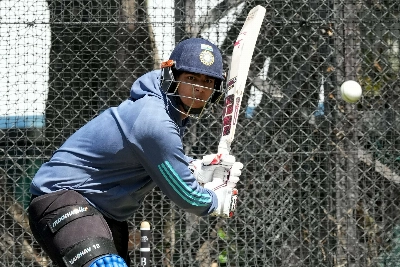
The tone for the chase was set by an explosive opening partnership between Abhishek and youngster Vaibhav Sooryavanshi, who put together 133 runs in a mere 7.1 overs. Sooryavanshi, drafted into the side for Sanju Samson, contributed a brisk 45 off 19 deliveries. Their partnership was fueled by a record-breaking Powerplay performance, as India raced to 118 runs in the first six overs—the highest score in that phase between two Full Member nations. When the partnership finally broke, India needed 66 off 77 balls. Promoting Sooryavanshi at Sanju Samson’s expense, and the teenager vindicated the call almost immediately, india broke up a successful opening pair. Then slapped a six past point two balls later, he drove Jacob Duffy over mid-on for four. One over in, India had 26. Adam Milne leaked 17 in the second over. Michael Bracewell’s offspin found no grip and went for 21. The fourth bowler in four overs, conceded two sixes and two fours in a 20-run over, kyle Jamieson. Bhuvneshwar was hit for two sixes in his second over, Arshdeep went for 15 in the sixth, and the hosts finished the Powerplay on 58.
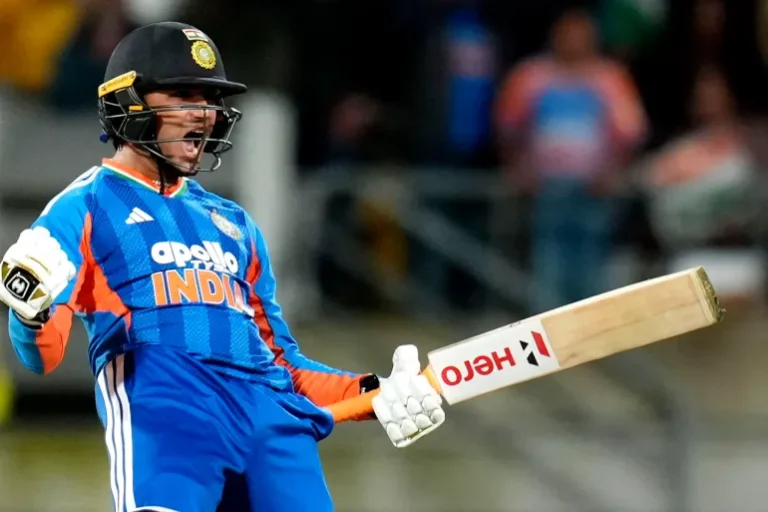
Abhishek’s own contribution was nothing short of historic. He reached his hundred off just 35 balls, narrowly missing his own record, and eventually departed for 113 off 38 balls after hammering 11 sixes. Operating at a strike rate of 297.37, he reached his half-century in just 15 balls. Although he fell short of eclipsing Yuvraj Singh’s famous 12-ball fifty record, the innings dismantled the New Zealand bowling attack, which struggled to contain the left-handed duo on a ground featuring short square boundaries of 56 and 62 metres. Marking it with a clenched fist and a roar before sitting down in a meditative pose, abhishek flirted with his own 30-ball 100 record before reaching three figures off 35. But another one did not, yuvraj Singh’s 12-ball 50 record also stayed intact as he pointed out on X (Abhishek took 15). Nothing that followed slowed them down. The bowlers had to force batters to hit towards the longer straight boundaries, with square boundaries of just 56 and 62 metres.
New Zealand’s total of 198/3, while competitive on paper, was never enough against the onslaught. Earlier, Daryl Mitchell anchored the hosts’ innings with a career-best 89 not out off 52 balls, while Finn Allen contributed 40. The Kiwi innings regained momentum after an early breakthrough by Arshdeep Singh, who removed Tim Seifert. Despite the best efforts of Mitchell, who expertly navigated India’s death-bowling plans, and tight bowling from Nitish Reddy, the score was rendered inconsequential by India’s aggressive start. The night felt less like a continuation of a tight series than a rerun of the one-sided contest at home earlier in the year. The series’ most miserly bowler, curiously did not bring himself on until the ninth over, mitchell Santner. Nitish Reddy brought the innings back under control.
India’s decision to promote Sooryavanshi paid dividends immediately, as the debutant set the pace alongside Abhishek, who notably cleared the ropes on his very first ball for the eighth time in his T20I career. While late wickets from the hosts briefly delayed the inevitable, the result was never in doubt once the Powerplay surge had decimated the required run rate. The final scorecard reflected the dominance of India’s top order in what turned out to be a one-sided encounter compared to the competitive nature of previous fixtures in the tour.